AI for Hair Transplant Clinics: Welcoming International Patients in Their Language
At a hair transplant clinic, an AI assistant welcomes international patients in their language, collects details and hands over to the coordinator; medical decisions stay with the doctor.

A hair transplant clinic AI project usually starts with the same problem: calls and messages from London, Riyadh, Berlin or Baku rarely match the team's working hours or the languages it speaks. A prospective patient asks about price, method, accommodation and transfers; if the answer is slow, they write to another clinic. This guide explains step by step how an AI phone assistant can welcome international patients in their own language at a hair transplant clinic, which information it should collect and hand over to the coordinator, and why medical decisions must stay with the doctor. We use Sesla AI Technologies as a concrete workflow example and state its limits just as clearly.
Why does a hair transplant clinic need an AI assistant?
Short answer: because demand is scattered across time zones, languages and channels, while the team is limited. International prospects often get in touch in the evening, at weekends or during their own country's office hours. The first contact may be a phone call, a WhatsApp message, an Instagram question or the chat window on the website. If the coordinator is busy with another patient's transfer, surgery-day preparation or a consultation, that first question goes unanswered. A hair transplant is a carefully considered decision, but the speed of the first reply is the first signal that tells the prospect whether to take the clinic seriously.
The second problem is repetitive questions. Which methods are offered, how many days does the process take, are accommodation and transfers included, how does post-procedure washing work, how do follow-up consultations proceed — these questions are asked again every day in different languages. The clinic already has general, approved answers to them in its own knowledge base; the challenge is presenting them consistently, in the right language, on every channel. When an AI assistant takes over this repetition, the coordinator gains time for prospects who need personal attention and for consultations that must be planned with the doctor.
The third problem is lost information. A WhatsApp message received at night ends up on another employee's phone in the morning, details given over the phone are not written down, and when the prospect calls a second time they have to explain everything again. In health tourism this disconnect damages both the patient experience and the team's workload. The assistant's value is therefore not only a fast answer but linking every contact to the same contact record and the same summary format. We covered the general framework in our guide to AI in health tourism; this article focuses on the hair transplant workflow.

What does welcoming an international patient in their own language mean in practice?
Welcoming someone in their own language is not just translation; it means understanding the question correctly, conveying the clinic's approved information naturally in that language and preparing the summary in the language the team works in. A German-speaking caller may ask about the difference between "FUE" and "DHI"; someone writing in Arabic may want to know about accommodation for a companion. The assistant answers with the general explanations from the clinic's knowledge base and then leaves the coordinator a summary in the team's language. The prospect feels at ease, and the team does not have to translate every message separately.
In practice three rules matter. First, the languages the assistant serves should follow the clinic's target markets; in an unsupported language the prospect is politely offered English or a human team member. Second, medical terms must rest on the same approved explanation in every language; giving different information in different languages damages trust. Third, price and package information must come only from the clinic's current, approved source. The assistant never guesses a price the clinic has not defined; it uses a clear statement such as "a personal quote is prepared after the doctor's assessment".
- Language choice: set by target markets (e.g. English, German, Arabic); unsupported languages get a polite redirect.
- Consistent terms: method explanations rest on the same approved text in every language.
- Price source: only the clinic's current, approved package information is used; no estimated prices.
- Team summary: whatever the conversation language, the coordinator receives a summary in the team's language.
Which topics does the assistant cover, and which decisions belong only to the doctor?
The clear boundary: the assistant informs and collects information; it does not decide. General process, the clinic's own descriptions of methods, accommodation and transfer arrangements, how to send photos, how the consultation is scheduled and how post-procedure follow-up works are topics the assistant can cover. By contrast, whether a person is suitable for a hair transplant, how many grafts may be needed, which method fits them, medication use, the impact of chronic conditions and what result to expect can only be answered by the doctor's assessment. When such questions come up, the assistant does not dodge them; it says clearly that the question will be passed to the doctor's assessment and records it.
Writing this boundary down is one of the most important setup steps. The clinic's medical director or responsible doctor should review the answer patterns the assistant will use and approve a "never say" list. Statements such as "3,000 grafts will be enough for you", "the result will definitely look natural" or "you don't need to stop this medication" must never come from the assistant. We explained the general principles for healthcare in our clinic AI assistant guide; in hair transplantation they are especially critical for graft estimates and outcome expectations.
| Topic | Assistant's role | Decision maker |
|---|---|---|
| General process and method description | Shares the clinic's approved explanation | Clinic (content approval) |
| Photo submission | Explains which angles and which channel to use | Coordinator (intake) |
| Eligibility | Records the question and passes it to the doctor | Doctor |
| Graft count | Gives no estimate, refers to assessment | Doctor |
| Medication and health history | Records only the general information the clinic requests | Doctor |
| Price and package | Shares approved package information; promises no personal quote | Clinic / coordinator |
| Consultation time | Offers available slots, records them with explicit approval | Patient and clinic |

Which information should be collected at first contact?
At first contact the goal is not a complete medical file but enough information for the coordinator to take the right next step. Too many questions tire the prospect, and collecting unnecessary personal data creates a data protection risk. The question list should therefore be short, purposeful and approved by the clinic. The assistant can also briefly explain why it asks each question; for example, "In which language and through which channel would you like us to get back to you?" clarifies both the contact preference and the scope of consent.
- Name and preferred form of address
- Country, city and preferred language
- Callback channel (phone, WhatsApp, email) and suitable time window
- Contact consent: scope, date and source
- General area of interest (hair, beard, eyebrows or other services the clinic offers)
- Planned travel period (approximate, not a fixed date)
- Whether they will send photos and through which channel
- Open questions to pass to the doctor
Decisions about special categories of data such as health history, medication or previous procedures belong to the clinic. Some clinics prefer to collect this only during the doctor's consultation; others use a short pre-assessment form. Whichever path is chosen, the assistant should collect this information only in fields the clinic has defined, within explicit consent and a privacy notice. The clinic's data policy should also state who can access the record and how long the information is retained.

How should photo submission and pre-assessment be organised?
The photo flow is a critical threshold in a hair transplant clinic's conversion process, because the doctor's assessment often relies on it. The assistant's job is not to interpret photos but to make it easy for the prospect to send the right ones through the right channel. It explains the angles defined by the clinic (front, top, sides, back of the head) in plain language, gives short tips on good light and sharp shots, and explains which secure channel receives the photos. When photos arrive, the assistant says "the assessment will be done by the doctor and our coordinator will get back to you"; it does not comment on the content.
Timing of the pre-assessment must also be clear. Based on the clinic's real workflow, the assistant sets an accurate expectation such as "photos are usually passed to the doctor during working hours"; it does not promise an exact duration. When the doctor or coordinator wants to speak with the prospect, the assistant offers options from the clinic's defined working hours and free calendar slots. The call is added to the calendar only after the prospect explicitly confirms the day and time. Time zone differences should be stated explicitly: a confirmation such as "15:00 Istanbul time, 13:00 your time" reduces missed calls.
How are travel, accommodation and transfer questions answered?
For a prospect from abroad, a hair transplant decision is also a travel decision. Questions such as how many nights to stay, how to get from the airport to the clinic, how far the hotel is from the clinic, whether a companion can stay, and how the procedure day and the follow-up day are planned come before medical questions. These are logistical and can be answered with the clinic's approved package description. What the assistant must do here is clearly separate what the package includes from what it does not; stating plainly that flights are not included, that extra nights are planned separately or that transfers are limited to certain hours prevents disappointment later.
Dates also need care in travel planning. When a prospect says "I'd like to come next month", the assistant should not record this as a fixed procedure date; it is only an approximate travel period. The exact date is set by the coordinator together with the prospect once the doctor's assessment and the clinic's procedure calendar are clear. On topics such as visas, insurance or entry rules, the assistant points to official sources and gives no binding information. This distinction protects the clinic from false expectations and ensures the prospect verifies information with the right source.
How do phone, WhatsApp and social media messages come together in one flow?
Hair transplant prospects move between channels: they see a before-and-after post on Instagram, switch from the website to WhatsApp and call a few days later. If channels are managed by separate teams or separate phones, the same prospect looks like three different records. A setup with a shared knowledge base and a shared contact record ensures the prospect receives the same information whichever channel they use, and the coordinator sees one history. In this approach Sesla AI Technologies runs phone, WhatsApp, Instagram, Messenger and website chat on the same knowledge base; see our WhatsApp AI assistant page for details.
Identity matching requires care. The phone number is the strongest key; name similarity is not enough to merge two people. If the prospect writes from a different number, that number should be linked to the same record only after explicit confirmation. This approach also prevents details from a relative writing as a companion from being mixed into the patient's record by mistake. In health tourism several members of one family often talk to the same clinic; separate records are necessary for both privacy and accurate follow-up.
A representative dialogue: how is a German-speaking prospect welcomed?
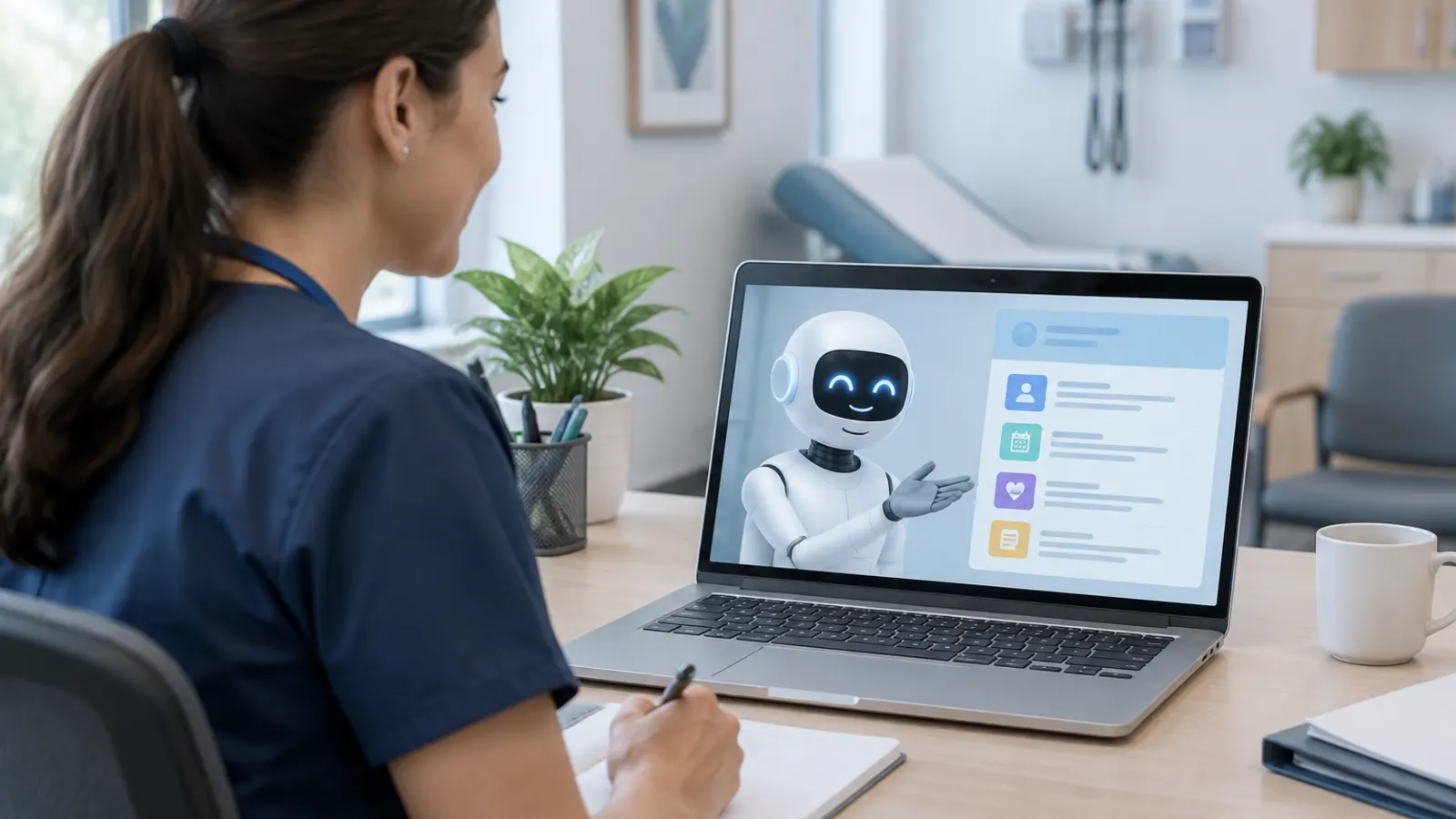
The following dialogue is representative; it is not taken from a real patient conversation and should be adapted to the clinic. Prospect: "Hello, I'm considering a hair transplant in Turkey. How many grafts would I need and what does it cost?" Assistant: "Hello, thank you for your interest. The number of grafts can only be determined once our doctor has assessed your photos, so I can't give you a number right now. I can describe the package scope in general and explain how to send photos. Through which channel would you like us to get back to you?"
Prospect: "WhatsApp is fine. Also, I take blood pressure medication — is that a problem?" Assistant: "That's an important question and our doctor will assess it. I'm noting your question and passing it to our coordinator. Do you agree that we send you information via WhatsApp? You can withdraw this consent at any time." The prospect agrees. The assistant explains the photo angles, offers available times for a call with the coordinator in both Istanbul time and the prospect's time zone, and records the call once the prospect explicitly picks a time. The summary sent to the coordinator reads: "German, Berlin; hair; travel: spring; WhatsApp consent given; open question: blood pressure medication — for doctor; photos pending; call confirmed."
How do you comply with data protection, consent and commercial messaging rules?
Health data is a special category of personal data, so using AI at a hair transplant clinic must be designed together with data protection rules. In Turkey the KVKK applies; for patients from abroad, regulations such as the GDPR may also become relevant depending on their country. The privacy notice should be presented briefly and clearly at the start of the call or in the first message; if calls are recorded, this must be stated explicitly. Data requiring explicit consent should be collected only after consent is given and limited to its purpose. This section provides general information; it is not legal advice and should be clarified with the clinic's own legal counsel.
Commercial messaging rules also matter. Replying to a prospect's request for information is not the same as sending promotional or reminder messages later. In Turkey, commercial electronic messages require the recipient's consent and registration in the national consent system (İYS); when someone opts out, sending must stop immediately. In practice the assistant records contact consent with its scope, date and source, marks a statement such as "I don't want any more messages" as an opt-out and stops the follow-up flow. Outbound calls should likewise go only to people who left a request and gave consent, for the stated purpose; cold calling is not part of this setup.
- The privacy notice is presented briefly and clearly at first contact; call recording is disclosed.
- Health data is collected only in clinic-defined fields and with explicit consent.
- Contact consent is stored with scope, date and source; opt-outs take effect immediately.
- Promotional and reminder messages require commercial message consent and İYS registration.
- Outbound calls go only to people who left a request and gave consent.
How does classic call handling compare with an AI-supported flow?
The purpose of the comparison is not to remove the human team but to clarify which work belongs to whom. The coordinator's role in tasks that require empathy, persuasion and personal planning continues; the assistant takes over repetitive information sharing, initial classification and summarising. The table below compares criteria only; it contains no success rate or savings claim, because results depend on the clinic's volume, channel mix and team processes.
| Criterion | Classic handling | AI-supported flow |
|---|---|---|
| After-hours requests | Wait for a morning callback | Request is handled, summary ready in the morning |
| Language coverage | Limited to the team's languages | First contact in the languages the clinic chooses |
| Consistency | Can vary by person | Same approved knowledge base |
| Channel history | Scattered across phones and accounts | Combined in one contact record |
| Medical questions | Coordinator may feel pressured to answer | Recorded and passed to the doctor |
| Consent record | Often not written down | Kept with scope, date and source |
As the table shows, the biggest difference is where and how information is kept. We described the general setup of medical call handling in our medical call centre guide; in hair transplantation, international patients, the photo flow and travel planning add further layers. You can explore sector-specific scenarios on our hair transplant clinics page and broader use cases on our health tourism page.
Step-by-step setup and test plan
Setup starts by copying the clinic's existing workflow; the assistant does not invent a new process but brings order to the one that exists. The plan below suggests a four-week framework. Durations vary with the clinic's readiness, the maturity of its knowledge base and its approval processes; no fixed setup time is promised. Naming an owner and an acceptance criterion at the end of each step clarifies what counts as "ready" during testing.
- Week 1 — Inventory: list channels, target languages, frequent questions, package information and coordinators' working hours.
- Week 1 — Boundary text: with the responsible doctor, write down what the assistant must never say and which question types go to the doctor.
- Week 2 — Knowledge base: turn method explanations, photo instructions and accommodation/transfer details into approved texts; check each language.
- Week 2 — Data and consent: define the fields to collect, the privacy notice, the consent record and the opt-out flow.
- Week 3 — Handover and calendar: set the coordinator summary format, urgent routing and the match between call times and working hours.
- Week 3 — Internal testing: try several scenarios in each language: price, grafts, medication, companion, opt-out.
- Week 4 — Controlled launch: start with one channel or after-hours only; read summaries daily and correct the knowledge base.
- Week 4 — Review: assess sample conversations with the doctor and coordinator and close remaining gaps.
What to measure in testing should be defined upfront: number of requests answered, completeness of summaries passed to the coordinator, correct classification of questions passed to the doctor, correct handling of opt-outs and how many questions a prospect has to repeat. These measurements come from the clinic's own data; no target rate is promised in advance. When setting up with Sesla AI Technologies, the same test scenarios can also be tried in the live demo, so the team can judge the assistant's voice and conversation flow for itself.
What are the most common mistakes at hair transplant clinics?
The most common mistake is designing the assistant as a sales-pressure tool. Urgency phrases such as "if you decide this week" damage trust in a health decision and may also conflict with advertising rules. The second mistake is trying to give a single price figure in every case; when personal needs depend on the doctor's assessment, the right answer explains the package scope and how the quote is prepared. The third mistake is presenting before-and-after images or patient reviews through the assistant as if they were certain outcomes. Every patient is different, and the assistant should say so clearly.
On the operational side, the most common problem is an unclear handover point. When does the assistant leave the conversation to the coordinator, and what does it do in an emergency (for example a report of severe pain or bleeding after the procedure)? These scenarios must be written down: for urgent health complaints the assistant gives the emergency line defined by the clinic and, if needed, local emergency services, and does not attempt an assessment. Finally, failing to update the knowledge base is a risk too; when package scope or transfer arrangements change, an assistant repeating outdated information is the fastest way to lose trust.
- Avoid sales pressure and urgency phrases.
- Do not give a single-figure price when needs are personal; explain the package scope and quote process.
- Do not present before-and-after images or reviews as certain outcomes.
- For urgent health complaints, refer to the clinic's emergency line and local emergency services.
- Update the knowledge base the same day when package, transfer or accommodation details change.
Conclusion
At a hair transplant clinic, well-designed AI is a first-contact layer that welcomes international patients in their own language, without delay and with consistent information. Its value lies not in taking over medical decisions but in reliably collecting information, easing the photo flow, recording consent and leaving the coordinator a clear summary. Graft count, eligibility and treatment planning always remain with the doctor. If you want to plan your clinic's channels, languages and boundary text, you can try your own scenario with Sesla AI Technologies in the live demo and compare plans on the pricing page.
Frequently asked questions
What does an AI assistant do at a hair transplant clinic?
It welcomes international patients in their language, shares general process information, records consent and basic details, explains photo submission and hands the request to the coordinator with a summary.
Can the assistant tell me how many grafts I need?
No. The graft count is determined only by the doctor's assessment of the photos and the person; the assistant records the question and passes it on.
Does the assistant decide whether I am suitable for a hair transplant?
No. Eligibility is a medical assessment made only by the doctor. The assistant does not diagnose or recommend treatment.
Which languages can be supported?
Languages are chosen according to the clinic's target markets. In an unsupported language the prospect is politely offered English or a team member.
How are photos received and who reviews them?
The assistant explains the angles and the secure channel defined by the clinic; it does not interpret the photos. The doctor reviews them.
Does the assistant give prices?
It shares only the clinic's current, approved package information. A personal quote is prepared by the coordinator after the doctor's assessment.
How is a consultation call scheduled?
The assistant offers options within the clinic's working hours and free calendar slots; the call is recorded only after the prospect explicitly confirms day and time.
What should be considered regarding data protection and İYS?
Provide a privacy notice, collect health data only with explicit consent in limited fields, require consent and İYS registration for commercial messages and apply opt-outs immediately.
What happens if an urgent complaint is reported after the procedure?
The assistant does not assess; it gives the clinic's emergency line and, if needed, local emergency services and alerts the team.
Does the coordinator's role disappear?
No. The assistant handles repetitive information and summaries; personal planning, quotes and the patient relationship stay with the coordinator.
Describe your needs in 3 minutes and we prepare your assistant draft and quote.
Hear our next-generation voice AI in the live demo.Try the live demo →