AI Assistant for Clinics: A Guide to Patient Reception, Appointments and Reminders
What a clinic AI assistant is: patient reception, booking and reminder flows, comparison tables, clinic scenarios, a sample dialogue, a 7-step setup, data protection and consent.

A clinic AI assistant is software that answers a clinic’s phone line, WhatsApp and website chat 24/7; it responds to patient questions with information the clinic has approved, takes appointment requests and records them in the calendar, organizes reminders and callbacks, and hands every topic that needs a medical decision to the team. From physiotherapy centers to eye clinics, from aesthetic centers to polyclinics and medical centers, the same picture repeats: while the receptionist helps one patient the phone rings, WhatsApp messages pile up after hours, a patient forgets the appointment and the empty slot never comes back. In this 2026–2027 guide we explain what an AI assistant for clinics is, how it works from patient reception to appointments and reminders, which tasks must stay with people, the setup steps, selection criteria and the data protection framework.
Who is this guide for? People searching for a "clinic AI assistant" are mostly owners of busy clinics, clinic managers and patient coordinators. The intent is clear: stop missed calls and late replies, reduce the load on the front desk and lower the no-show rate. This article focuses on general clinic operations; flows specific to dental clinics are covered in a separate guide. Sesla, on Türkiye’s most advanced AI call center infrastructure, runs these processes with your clinic’s rules as an AI phone assistant that answers the phone and message channels with the same knowledge base.
What is a clinic AI assistant, and what does it do and not do?
A clinic AI assistant is an AI healthcare assistant that speaks natural language and takes over the repetitive, rule-based part of patient communication. A classic answering machine only records messages; a touch-tone menu sends the patient around in circles. An AI assistant understands a question like "Is there a physiotherapy slot on Thursday afternoon?", checks the calendar, offers available times and records the appointment request. While doing so it never leaves the limits the clinic has set.
- Reception: answers every call on the first ring with the clinic’s name and a short, polite greeting.
- Information: address, parking, opening hours, departments, doctors’ working days, contracted insurers and documents to bring to the visit.
- Appointments: asks for the department and preferred time, offers available slots, records the request and takes change and cancellation requests.
- Reminders: reminds consenting patients before the appointment and, if needed, takes a time change request.
- Intake: non-medical details such as name, phone, department, and whether it is a first visit or a follow-up.
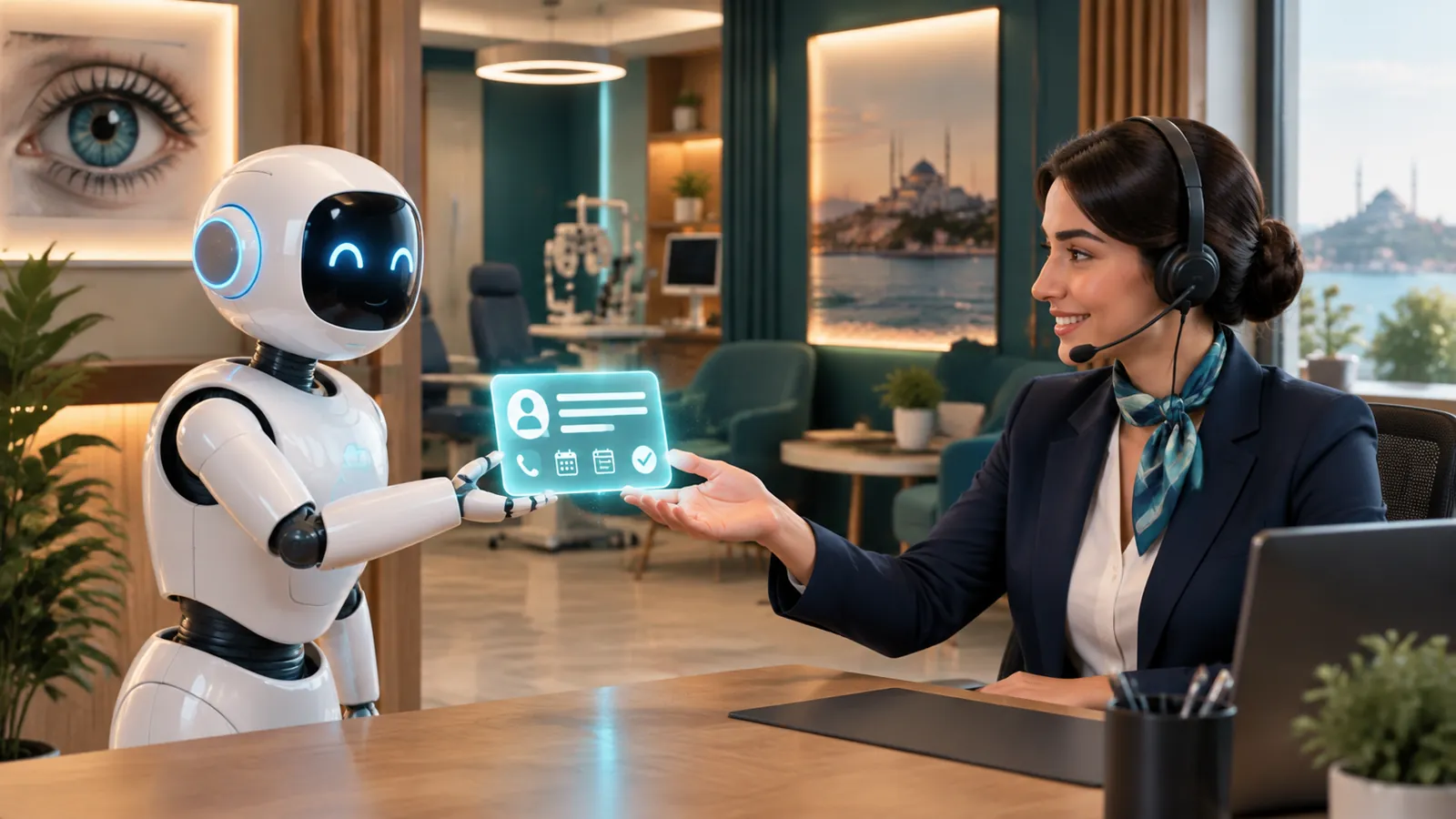
- Handoff: when there is a medical question, a complaint, an urgent symptom or a special request, the conversation is handed to the team with a summary.
What it does not do matters as much as what it does. A clinic assistant does not diagnose, recommend medication or doses, interpret test results, choose between treatment options or make medical judgements such as "this symptom is nothing serious". When a patient asks a medical question, the assistant’s job is to note it politely and pass it to the relevant doctor or nurse; when an urgent symptom is described, it directs the patient to emergency number 112 or the emergency department immediately. This limit is defined as a written rule at the very start of setup.
From reception to appointment: how does a clinic assistant work?
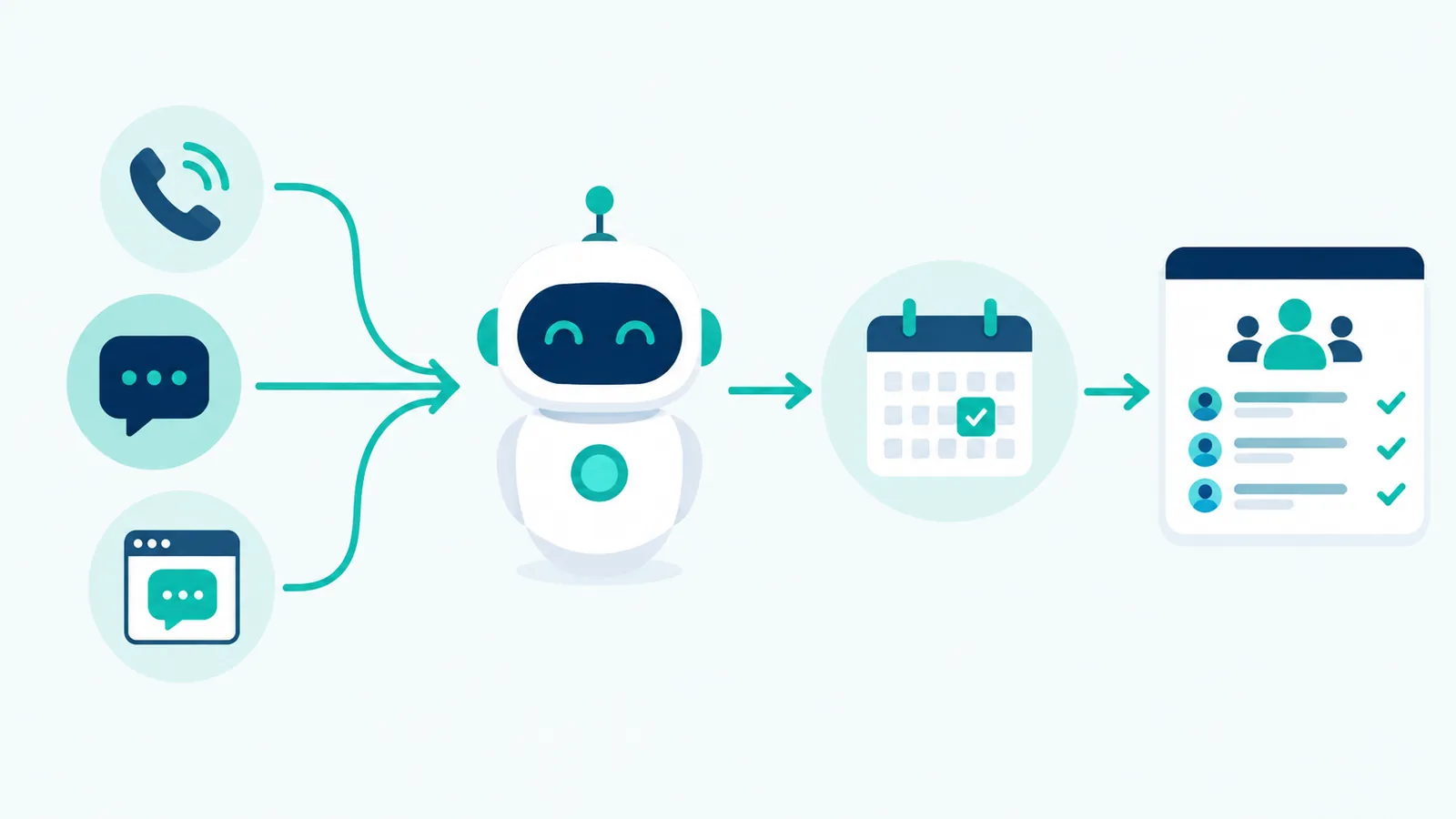
A clinic assistant works in four stages — greeting, understanding intent, answering or booking, and recording with a summary — and uses the clinic’s knowledge base and calendar rules at every stage. On the phone, patients call the clinic’s existing number; the number does not change and calls reach the assistant via forwarding. On WhatsApp and website chat, the same knowledge base answers in writing.
- 1. Greeting: a short opening that matches the clinic’s tone, such as "Hello, X Medical Center, how can I help you?"
- 2. Understanding intent: distinguishing whether the patient is calling to book, ask for information, change an appointment, ask about results, complain or report an emergency.
- 3. Answer or action: an approved answer to information questions; for appointment requests, asking for department, doctor preference and time, then offering available slots.
- 4. Record and summary: the conversation summary, the patient’s request and the next step appear in the team panel; the appointment is recorded in the calendar.
Appointment rules are clinic-specific and written down during setup: which department works on which day, how long a first visit and a follow-up take, which procedures require a preliminary consultation first, whether same-day appointments are given, and closed times such as lunch breaks. The assistant cannot step outside these rules; whenever it is unsure it records the request as "awaiting team approval" and tells the patient they will be called back.
Reminders and no-show management
A no-show is an empty slot in the clinic calendar that cannot be recovered. The reminder process covers reminding the patient before the appointment with a short message or call, confirming attendance and changing the time if they cannot come. Two rules matter here: the reminder should only contain appointment information and must not turn into promotional content, and the message must not include sensitive details such as medical information, diagnosis or procedure names. "This is a reminder of your appointment tomorrow at 14:00" is enough.
When a time change request arrives, the assistant can offer new available slots; for appointments that require the doctor’s specific approval, however, it is better to hand the change request to the team. Flows such as offering a freed-up slot to patients on a waiting list can also be set up if the clinic wishes. What you need to measure is simple: count your no-show rate before and after reminders from your own calendar.
Receptionist, answering machine, call center and AI assistant compared
Clinics usually manage patient communication in four ways; the differences lie in availability hours, how many patients can be handled at once and where the data ends up. The table is designed to help you think about which combination suits your clinic.
| Criterion | Front desk / receptionist | Answering machine | External call center | Clinic AI assistant |
|---|---|---|---|---|
| Availability | Business hours | 24/7 recording, no answers | Contracted hours | 24/7 |
| Simultaneous calls | One line, queue builds | Unlimited recordings | As many as agents | Several conversations at once |
| Booking | Yes | No | Usually yes | Yes, within rules |
| Clinic knowledge | Very high | None | Depends on training | As good as the knowledge base |
| WhatsApp and web chat | Manual, delayed when busy | None | Separate service | Same knowledge base |
| Conversation summary | Manual notes | Audio recording | Report | Automatic for every conversation |
| Medical question | Passes to doctor | None | Passes to doctor | Passes to doctor, no interpretation |
The right answer is rarely "either this or that". The most efficient model is for the front desk team to handle patients in the clinic and complex requests, while the AI assistant answers overflow calls, after-hours requests and repetitive questions. The receptionist’s time then shifts from giving directions on the phone to caring for the patient standing at the desk.
Which types of clinics is it suitable for? Industry scenarios
A clinic AI assistant can be adapted to any type of clinic that works by appointment and receives many repetitive patient questions; the difference comes from a knowledge base prepared for each specialty’s own questions and rules.
| Clinic type | Frequent request | Assistant’s role | Stays with people |
|---|---|---|---|
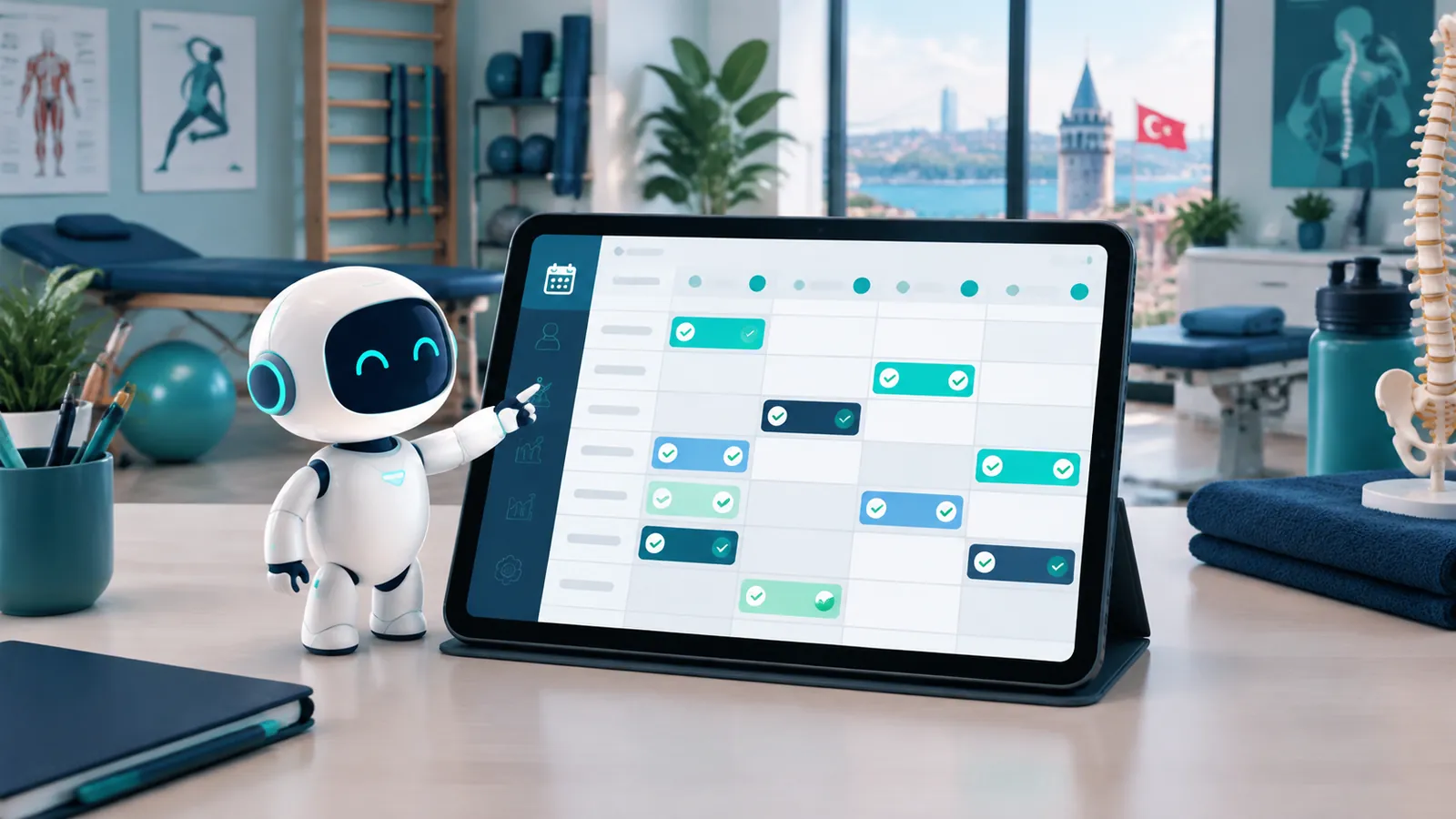
| Physiotherapy | Session plan, time change | Session booking, reminders, change requests | Treatment plan, number of sessions |
| Eye clinic | Exam booking, driving after eye drops question | Booking, general pre-exam information | Medical suitability and procedure decisions |
| Aesthetics and dermatology | Price, procedure duration, consultation | Consultation booking, general information, request summary | Suitability assessment, price quote |
| Polyclinic / medical center | Which department, which doctor, contracted insurer | Department routing, booking, document information | Interpreting results, medical questions |
| Psychological counseling | First session, fee, confidentiality | First session request, general information | Crisis situations and clinical assessment |
| Medical tourism | First information in a foreign language, process | Multilingual reception, intake | Treatment plan and quote |
In sensitive areas such as psychological counseling, the assistant’s role should be kept especially narrow: taking first-session requests and giving general information. When it hears a statement that signals a crisis, the assistant does not try to continue the conversation; it directs the patient to emergency help lines and the clinical team. You can explore healthcare-specific flows on our healthcare industry page and multilingual flows for patients from abroad on our medical tourism page.
Sample dialogue: a patient calling after hours
The example below shows how an evening call to a medical center can unfold. The clinic name and times are illustrative.
- Assistant: "Good evening, X Medical Center, I am the clinic’s AI assistant. How can I help you?"
- Patient: "I’d like a physiotherapy appointment for my knee, it’s my first visit."
- Assistant: "Of course. For a first examination in our physiotherapy department, Thursday 10:30 and Friday 15:00 are available this week. Which suits you?"
- Patient: "Friday 15:00, please. Also, my knee is very swollen — is that normal?"
- Assistant: "I am noting your complaint and passing it to our doctor; I cannot make a medical assessment. If the swelling increases quickly, or if you have a fever or severe pain, please call 112 or go to the nearest emergency department without waiting. May I have your first and last name for Friday 15:00?"
- Patient: "Ayşe Demir."
- Assistant: "Thank you, Ms Demir. Your appointment request for Friday 15:00 has been recorded. If you have previous imaging results, please bring them. We will send you a reminder before your appointment. Is there anything else I can help with?"
In this example the assistant did three critical things right: it offered the appointment according to calendar rules, passed the medical question to the doctor without interpreting it, and clearly gave emergency guidance for a situation that carried a risk signal. In the morning the clinical team sees the summary and the swelling note in the panel; the doctor can call the patient beforehand if needed.

How do you set up a clinic AI assistant in 7 steps?
Setup consists of collecting existing patient questions, preparing the knowledge base, writing calendar rules, defining handoff and emergency rules, connecting channels, testing and monitoring the first weeks. For an average clinic the most time-consuming part is not the technical connection but clarifying the clinic’s own rules.
- 1. Question inventory: together with the front desk team, list the most frequent phone and WhatsApp questions from the last few weeks (address, hours, prices, documents, doctors’ days, contracted insurers).
- 2. Knowledge base: write a short, current, clinic-approved answer to each question; decide whether prices are given, a range is stated or the patient is invited to a consultation.
- 3. Calendar rules: departments, doctors’ working days, appointment durations, first visit versus follow-up, closed times and the same-day booking rule.
- 4. Limits and emergency rules: put in writing what is said, and to whom the conversation is handed, for medical questions, complaints and urgent symptoms.
- 5. Channels: connect your phone number via forwarding, connect WhatsApp and website chat to the same knowledge base and set up the calendar integration.
- 6. Testing: the team calls from their own phones with realistic scenarios; difficult questions, mispronounced department names and emergency phrases must be tried.
- 7. Monitoring: read conversation summaries daily for the first two weeks, add weakly answered questions to the knowledge base and tighten handoff rules.
Sesla does this setup for you: it prepares the question inventory and knowledge base with you, defines calendar rules in Google Calendar and connects your existing number via forwarding without changing it. You can see the general logic of booking flows on our appointment automation page. And you can try how the assistant talks to a patient on your own phone with the live demo before buying.
30-day implementation plan
- Week 1: question inventory, knowledge base and calendar rules; internal test calls.
- Week 2: go live only after hours and on a busy line; read summaries daily.
- Week 3: open WhatsApp and website chat with the same knowledge base; start the reminder flow with consenting patients.
- Week 4: compare measurements with the previous period; decide whether to extend the scope.
How do you measure the success of a clinic assistant?
Success is measured by comparing the period before and after the assistant goes live using your own clinic’s data; record your own baselines instead of industry averages. Count at least two weeks of data manually before going live, then track the same metrics every week.
- Missed call rate: from the switchboard or carrier report, separately for business hours and after hours.
- First reply time to messages: the time between a patient’s first message and the first reply on WhatsApp and web chat.
- Request-to-appointment rate: how many patients who called or wrote to book were actually entered in the calendar.
- No-show rate: before and after reminders, by department.
- Handoff rate: conversations handed to the team as a share of all conversations; if high, the knowledge base has gaps.
- Front desk load: time the receptionist spends on the phone during the day and the time left for patients in the clinic.
The goal of measurement is not only to see the result but to improve the knowledge base. Group handoff reasons every week: if the same question is handed off often, add an approved answer; if the same complaint repeats, fix the process inside the clinic. Over time the assistant becomes better suited to your clinic’s questions.
How is a clinic AI assistant priced?
A clinic AI assistant is usually priced as a monthly package; included call minutes, number of channels and setup support determine the total cost. When comparing, look beyond the monthly fee to the following items:
- How many phone minutes are included and how is overage charged?
- Are WhatsApp, Instagram, Messenger and website chat in the same package or charged separately?
- Are setup, knowledge base preparation and calendar integration included?
- Do conversation summaries, recordings and team handoff cost extra?
- What are the contract term and cancellation conditions?
Sesla’s current packages and included scope are on our pricing page. For your own estimate, consider together your monthly inbound calls, the share of missed calls, the number of no-shows and your average visit or procedure value. These four figures show the value the assistant can create in your clinic from your own data rather than a guess.
12-point checklist for choosing a clinic AI assistant
The most reliable way to choose the right assistant is to test it with your clinic’s real questions. Look for answers to these questions in the demo call and in proposals:
- 1. Turkish understanding: does it correctly understand department names, doctors’ names and everyday speech?
- 2. Naturalness: does the voice sound robotic, or can the patient talk comfortably?
- 3. Limits: when a medical question comes in, does it pass it to the doctor without interpreting it?
- 4. Emergency routing: when an urgent symptom is described, does it direct the patient to 112 and the emergency department?
- 5. Calendar: does it follow your booking rules (duration, days, closed times) and avoid conflicts?
- 6. Channels: do phone, WhatsApp and website chat use the same knowledge base?
- 7. Handoff: can it hand the conversation to the team with a summary, and do you set the handoff conditions?
- 8. Summary: is a written summary of every conversation available where your team can see it?
- 9. Number: is your existing clinic number kept?
- 10. Data: is it clear where and for how long records are stored and who can access them?
- 11. Setup: who prepares the knowledge base and rules, and how much support is provided?
- 12. Trial: can you try the assistant in a real conversation before buying?
Risks, data protection and consent: what to watch for when using AI in a clinic
The main risks of using AI in a clinic are crossing the medical line, collecting more health data than necessary, giving wrong or outdated information and sending commercial messages without consent. All of these can be managed with written rules during setup.
- Medical decision limit: the assistant does not diagnose, recommend treatment or medication, or interpret results; this rule is the first line of the knowledge base.
- Emergencies: when an urgent symptom is described, the assistant must direct the patient to 112 and the emergency department and not prolong the conversation.
- Health data (KVKK, Turkey’s data protection law): health data is a special category of personal data. Medical information not needed for booking should not be requested; the privacy notice, access rights and retention period should be set together with your clinic.
- Call recording notice: if the conversation is recorded, the patient should be informed at the start of the call.
- Commercial electronic messages (İYS, Turkey’s message consent registry): appointment reminders are informational; messages with promotions or discounts require the patient’s consent and İYS registration.
- Message content: reminder messages must not include a diagnosis, procedure name or medical details.
- Accuracy: when prices, doctors’ days or contracted insurer information change, the knowledge base should be updated the same day.
This article is not legal advice; as the data controller, you are advised to work with your own legal counsel on data protection processes specific to your clinic. During Sesla setup, which data is collected and who can access it is decided together with you; no unnecessary personal data is requested.

Why Sesla AI?
Sesla AI offers businesses AI-powered customer communication on Türkiye’s most advanced AI call center infrastructure. It configures advanced language models used worldwide for your clinic’s real patient questions and does the setup for you.
- One knowledge base for phone, WhatsApp, Instagram, Messenger and website chat.
- Appointments with Google Calendar and a written summary of every conversation.
- Handoff to your team with the conversation summary in the cases you define.
- Your existing number kept via forwarding.
- Multilingual reception and optional voice cloning.
- A live demo so you can try the assistant before buying.
We cover dental-specific emergency triage and dentist calendars in our dental clinic AI assistant guide, office phone answering in our AI secretary guide and the messaging side in our WhatsApp AI assistant guide.
Conclusion
A clinic AI assistant takes over the repetitive part of patient communication with the aim of reducing missed calls, late replies and forgotten appointments, while always leaving medical assessment to the clinical team. The key to success is rules as much as technology: an approved knowledge base, clear calendar rules, an explicit medical limit and data management that complies with data protection law. Once these are in place, the assistant lightens your front desk team’s load and gives your patients a clinic they can reach at any hour.
To get started: write down the ten most frequent questions from the last two weeks and your booking rules on one page, then try the assistant with those questions in the live demo.
Frequently asked questions
Can a clinic AI assistant diagnose?
No. A clinic assistant does not diagnose, recommend treatment or medication, or interpret results. It notes medical questions and passes them to the doctor, and directs patients with urgent symptoms to 112 or the emergency department.
Will patients know they are talking to AI?
It is recommended that the assistant introduces itself as the clinic’s AI assistant at the start. Transparency builds trust; if the patient wishes, the conversation can be handed to the team.
Will our clinic number change?
No. Calls reach the assistant from your existing number via forwarding; patients keep calling the number they know.
How are appointment reminders sent?
Consenting patients receive a short message or call before the appointment with the date and time, and a change request is taken if they cannot come. No medical details such as a diagnosis or procedure name are included.
Is health data safe under data protection law?
Health data is a special category of personal data. Medical information not needed for booking should not be requested; the privacy notice, access rights and retention period should be set together with your clinic.
Which clinics is it suitable for?
It can be adapted for clinics that work by appointment, such as physiotherapy, eye, aesthetic and dermatology clinics, polyclinics and medical centers, counseling centers and medical tourism.
Does it replace our receptionist?
The goal is to reduce the load, not replace people. The assistant handles overflow and after-hours calls and repetitive questions; the receptionist focuses on patients in the clinic and complex requests.
Does it also answer WhatsApp messages?
Yes. Sesla answers phone, WhatsApp, Instagram, Messenger and website chat with the same knowledge base, so patients get the same correct information whichever channel they use.
How long does setup take?
It mostly depends on how quickly the clinic clarifies its knowledge base and calendar rules. Sesla does the setup for you; improvements continue in the first weeks based on conversation summaries.
How is it priced?
Usually by monthly package, included minutes and channels. Sesla’s current packages are on the pricing page.
Describe your needs in 3 minutes and we prepare your assistant draft and quote.