
Omnichannel Customer Communication: Phone, WhatsApp and Instagram in One AI
Omnichannel customer communication: unite phone, WhatsApp, Instagram, Messenger and web chat with one knowledge base, shared history and one handover.

Omnichannel customer communication aims to provide the same accurate information wherever a customer contacts you and preserve context when identity can be matched safely. When assessing an AI call center solution, check whether phone, WhatsApp, Instagram, Messenger and web chat answers draw on one knowledge base. For a workflow designed with Sesla AI Technologies, the goal is not five independent scripts but one governed source adapted to each conversation format. This guide covers ownership, versions, identity boundaries, shared history and human handoff. Continuity should serve the customer, not become indiscriminate tracking.
Multichannel versus omnichannel: the practical difference
Multichannel service means being available at several touchpoints. If telephone and messaging teams maintain separate information files, customers may receive conflicting answers. Omnichannel service governs continuity between those touchpoints: current facts, reliable identity and clear ownership of an open request. A common screen alone does not create that continuity; the underlying decision rules must also agree.
Consider opening hours: different hours on the phone and Instagram are a knowledge problem, not a tone difference. Short spoken sentences and a written list can convey identical facts. Omnichannel does not require identical wording. It also allows a fresh question when history cannot safely be linked; pretending to recognise the wrong person is worse than asking again.
| Area | Multichannel | Omnichannel |
|---|---|---|
| Knowledge | Separate channel files may diverge. | One approved source with traceable versions. |
| History | The customer may repeat the issue. | Relevant context continues after reliable matching. |
| Ownership | Requests can remain open in separate inboxes. | One team queue with an assigned owner. |
| Quality | Channels are checked separately. | The same question is compared across channels. |
One knowledge base as the source of truth
One knowledge base need not mean one enormous document. Service descriptions, hours, appointment rules and handoff boundaries can have separate entries. Each entry needs a current approved version. Assistants should use that version rather than old channel notes. A single source of truth is a governance discipline, including acknowledging missing facts instead of filling gaps with guesses.
Separate public knowledge from customer-specific history. Service scope belongs in the knowledge base; an individual appointment request belongs in restricted customer context. Mixing them risks turning a private note into a general answer. Record the owner, effective date and review date. The business must resolve conflicting documents rather than expecting AI to invent a compromise rule.

How to govern ownership and content versions
Assign an editor, approver and release owner for every topic. Small teams may combine roles, but accountability must remain explicit. A change needs a clear effective time, affected wording and retest scope. Define a substitute owner, an urgent correction route and rollback conditions so staff can find the current answer without searching for who owns the file.
A version log should show old wording, new wording, reason and approver, not just a renamed file. Ask the same sample question on voice and messaging after release. Investigate stale source selection, timing and translation separately. Turkish updates must not leave English and German behind. Effective dates also prevent a new rule from being applied retrospectively to an earlier event.
- Assign a topic owner and backup; separate editing rights from access to answers.
- Keep drafts separate from approved content; pending text must not become a live source.
- Record effective dates, reasons and affected languages; avoid republishing stale versions.
- Retest the same question on every channel and record who closed the finding.
Channel-specific tone without changing facts
Phone callers cannot reread a paragraph, so use short sentences and one question at a time. WhatsApp can present the same answer as a short list. Instagram, Messenger and web chat may need more concise openings. None of these choices should change hours, scope or appointment conditions. Tone rules must never turn uncertainty into a completed action or an unsupported promise.
This article does not repeat channel connection steps. Use the WhatsApp AI assistant guide and Instagram DM AI assistant guide for those topics. Apply the same knowledge and handoff rules when evaluating web chat and Facebook Messenger. A completed connection does not prove safe context handling. Changing channels must not bypass identity or access checks.
Identity matching: strong evidence, bounded trust
The sensitive decision is whether two conversations belong to the same person. A phone number is a strong anchor, especially between WhatsApp and a call, but does not prove that the user is unchanged or entitled to every detail. Consider shared phones, reassigned numbers and calls made on someone else’s behalf. Distinguish linking evidence from any extra verification required for a specific action.
Names, similar photos, location, wording and timing are not enough to merge accounts. Linking Instagram or Messenger to a phone record needs an approved verification route; otherwise keep them separate. Ask only what is needed and never reveal another conversation as a hint. Define how to split an incorrect merge and correct summaries. Do not merge on weak signals: asking again can be the safer service outcome.
Shared history and an illustrative channel switch
Shared history is not unrestricted access to every message. Keep relevant context, last confirmed state, stated preference and next action, with provenance and uncertainty visible. A proposed time is not a confirmed appointment, silence is not acceptance and an attempted handoff is not resolution. New statements can correct an older summary; the assistant should ask again where accuracy or freshness is uncertain.
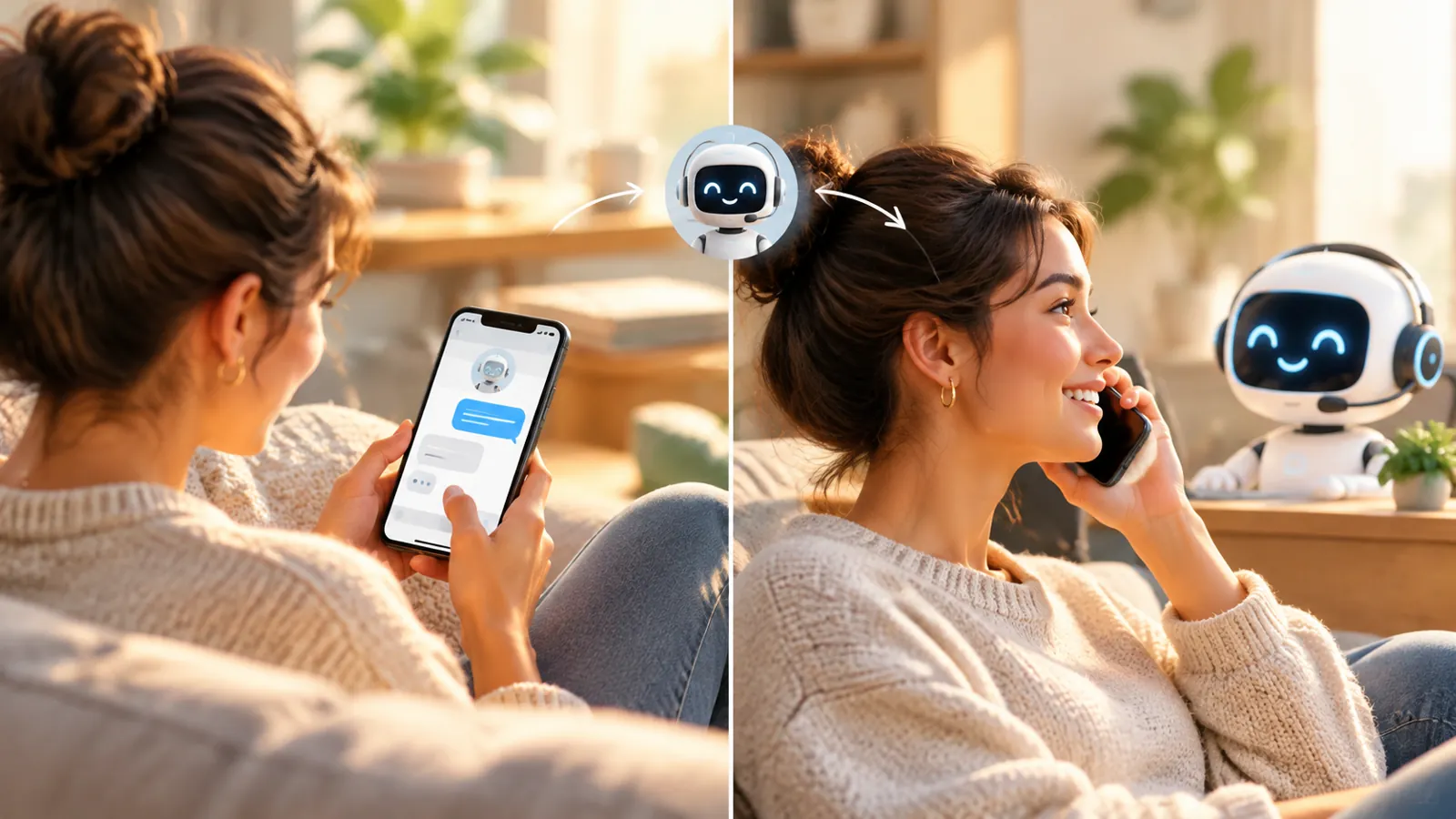
The following dialogue is illustrative, not an actual customer conversation. In the first path, the WhatsApp conversation and later call have been reliably matched through the same phone number under the business’s checks. No sensitive disclosure or action needing further verification is involved. In the second path there is no number match, so the assistant does not claim to see prior context. Actual verification requirements depend on the service.
- Illustrative customer, WhatsApp: Do you offer Saturday appointments? I would like to know the options.
- Illustrative assistant, WhatsApp: I can explain options using current opening information. Which service interests you?
- Illustrative customer, later by phone: I just messaged. Could we discuss appointment options?
- Illustrative assistant, reliable phone match: You asked about Saturday options on WhatsApp. No time has been confirmed. Which service should we discuss?
- Illustrative assistant, no phone match: I cannot safely link the earlier messages to this call. Which service and day would you like information about?
- Illustrative outcome: Use only necessary context after matching; otherwise do not open another conversation and proceed with newly supplied information.
Human handoff: one queue and clear ownership
Hand off when requested or when an issue exceeds scope. A matched call and message can still fragment service if separate teams unknowingly work the same issue. Design one team queue as the entry point, then assign an authorised owner. One queue does not mean every employee sees all data or handles every task; access boundaries and specialist ownership remain necessary. Validate this design with your own handoff scenarios.
The handoff summary should contain the issue, source version, identity assurance and next action without unnecessary personal detail. If no employee is available, describe follow-up rather than claiming transfer success. Record callback purpose and preferred time when requested. Link a new contact to an existing task only after reliable matching. Read, assigned and resolved are different states, not one completion label.

KVKK: shared memory is not unlimited collection
Phone numbers, messages, summaries and recordings may contain personal data. Assess purpose, legal basis, privacy information, access, retention and any transfers for the actual use case under KVKK. Omnichannel service does not require indefinite retention of every detail. An opening-hours question usually needs no identity document or extensive history. Access to one channel is not permission to expose its entire history to other teams. This is general information, not legal advice.
Minimise shared-memory fields to the issue, verified preference, necessary contact details and follow-up step. Recordings and summaries may need different retention rules. Assess recording purposes, legal basis and explanations separately. Update staff access when roles change and assign rights-request ownership. Prefer controlled non-personal test examples. Correcting a summary may also require checking related tasks and other summaries that copied the error.

Numbered plan: consistency testing across five channels
Test whether each channel answers from the same current facts, not whether replies have the same length. Build a shared set covering general knowledge, missing sources, changed rules, identity uncertainty and handoff. Write the expected source version and acceptance boundary before running tests. Fluency is not correctness: a brief admission of missing information is preferable to a confident invented detail. Content and operations owners should review the same examples.
- 1. Freeze scope: list five channels, languages, content version and responsible reviewers; log changes during testing.
- 2. Prepare shared questions: define expected facts about hours, scope and appointment conditions before observing answers.
- 3. Compare tone: allow short speech and written lists, but verify identical facts, exceptions and action status.
- 4. Test identity boundaries: compare reliable phone matching, a different number and weak profile similarities.
- 5. Test handoff and failures: inspect the shared queue for employee requests, missing knowledge and unsuccessful transfers.
- 6. Resolve and retest: record cause, correction and outcome; rerun failed cases and related positive examples after release.
| Scenario | Expected behaviour | Evidence |
|---|---|---|
| Same question, five channels | Same approved facts in different tones. | Compare replies with the source version. |
| WhatsApp then call from same number | Necessary context continues after reliable matching. | Check that the pending step remains accurate. |
| Similar name, different number | Keep history separate and ask what is needed. | Verify no other person’s details are disclosed. |
| Requested handoff cannot complete | Do not claim success; assign follow-up. | Inspect actual status in the shared queue. |
| Knowledge update | New version and translations preserve the same facts. | Check stale answers do not reappear. |
Pass or fail alone is insufficient. Record question, language, source version, identity-match state and next action using non-personal examples where possible. After a correction, check other channels too: shortening speech might remove a condition from written replies. New services, owners and handoff rules can all trigger retesting. Resolve critical findings before release and assign ongoing review responsibility.

Assessing operating scope and cost
Cost includes more than message or call volume. Cleaning knowledge, assigning ownership, maintaining three languages and operating the human queue require work. Check current Sesla AI Technologies plans against channels and usage needs; this article promises no price or allowance. Document what stays automated, what needs staff and who approves changes. Adding a channel without ownership does not itself improve service.
| Plan | Monthly | Annual (per month) | Included minutes | Extra minute | Setup on annual |
|---|---|---|---|---|---|
| Starter Plan | $59.99 | $44.99 | 120 min | $0.25 | Paid |
| Professional Plan | $129.99 | $97.49 | 300 min | $0.23 | Paid |
| Enterprise Plan | $259.99 | $194.99 | 600 min | $0.22 | Free |
| Premium Plan | $519.99 | $389.99 | 1,200 min | $0.15 | Free |
- Scope: define questions answered from the common knowledge base across all five channels.
- Ownership: assign content approval, versions, data requests and daily queue supervision.
- Quality: assess correct facts, safe matching, clarification and incomplete handoff follow-up together.
- Maintenance: recheck affected languages and all five channels after hours or service conditions change.
The guide to what an AI call center is can align your team on fundamentals. During evaluation, go beyond a successful sample. Repeat a question across channels, switch without a phone match and try an unavailable human handoff. Ask who receives a content change and when it becomes effective. Record gaps between your requirements and demonstrated behaviour using realistic, non-personal scenarios.
Also ask whether a channel switch needs identity at all. A general web chat question can often be answered from approved knowledge without collecting a phone number. Explain why information is needed when a personal request begins. Shared memory should serve a necessary purpose rather than become a condition of every interaction, and a channel switch must not silently change contact preferences.
Classify operational findings as knowledge, identity, tone or follow-up issues. Each needs a different remedy. Record the example, cause and retest without copying unnecessary personal details. Check related channels and languages, transfer unresolved findings when owners change and confirm observed behaviour before closing an issue. An edited sentence alone is not proof of a fix.
Conclusion: five channels, one knowledge discipline
Omnichannel customer communication combines accurate shared knowledge, safe recognition and request ownership. Add ownership and version rules to one knowledge base, then adapt tone around the same facts. Without reliable phone matching, do not merge history: ask what is needed. Track human handoff in one team queue and never call an incomplete step completed. Minimise data under KVKK and assess legal requirements for your actual use. After testing phone, WhatsApp, Instagram, Messenger and web chat, discuss scope with Sesla AI Technologies. Sustainable continuity needs sound information and accountability, not unlimited data.
Frequently asked questions
Are omnichannel and multichannel the same?
No. Multichannel offers multiple touchpoints; omnichannel governs shared knowledge, safe continuity and ownership.
Does one knowledge base mean one document?
No. Topics may be separate, but each needs an approved version, owner and effective date.
Is a phone number enough for every action?
No. It is a strong matching anchor, but shared phones and action risk may require extra verification.
Can accounts with the same name be merged?
A name, photo or similar message alone is insufficient. Keep accounts separate and ask when reliable verification is missing.
Can a call continue a WhatsApp conversation?
Relevant context can continue after reliable phone matching and access checks. Without a match, the assistant asks again.
Must every channel use identical sentences?
No. Speech may be brief and messages structured as lists. Facts, conditions and action status must remain consistent.
Who should own content updates?
Assign a topic owner, approver and backup. Retest affected languages and channels after changes.
Does one queue mean unrestricted staff access?
No. The queue provides shared intake and accountability; task and data access must remain permission-based.
Does KVKK require keeping all history?
This approach does not require keeping everything. Assess data scope and retention against purpose, legal basis and necessity.
What should be tested before release?
Test shared facts across five channels, version changes, reliable and uncertain identity, missing sources and failed handoff.
Describe your needs in 3 minutes and we prepare your assistant draft and quote.
Hear our next-generation voice AI in the live demo.Try the live demo →