
Automated Customer Calling System: Consent-Based Outbound Calls, IYS and KVKK
How to set up an automated customer calling system: consent-based outbound calls, IYS checks, KVKK notices, opt-out handling, acceptance tests and a sample call.

An automated customer calling system initiates telephone conversations according to a business’s defined purpose and rules. When choosing an AI call center, however, the first question is not how many people it can reach, but whom the business may call and why. Appointment reminders, requested callbacks and promotional conversations should not be treated as legally interchangeable. This guide brings together consent, İYS checks, KVKK obligations, reasonable calling windows and human handoff for teams designing consent-based outbound calls with Sesla AI Technologies. The aim is not to process an uncertain telephone list quickly, but to make the basis for each call, the boundaries of the conversation and the handling of individual preferences visible. The examples provide general information in the Turkish context; verify your actual implementation with legal counsel.
What is the purpose of the automated calling system?
Before setting up an automated calling system, write one clear purpose for each workflow. Returning a call that someone requested, confirming an existing appointment and conducting an approved promotional conversation must be separated. Purpose classification is not merely a reporting label: it determines which records need checking, what the conversation may cover and when the call should end. If the purpose cannot be stated clearly, or several justifications overlap in the same script, redesign the workflow before preparing a list.
A team looking for call center auto dialer software often thinks first about uploading numbers and writing a script. The source of the number and what the person actually requested need to be resolved earlier. Providing a telephone number on a form does not mean that the number may be called for every purpose. Keep the subject, date and scope of a callback request; do not present promotion of another service as its natural continuation. Rather than expecting the assistant to resolve uncertainty during the conversation, have the business decide eligibility before calling.
Transactional notifications concerning an appointment, order or requested callback may be assessed differently because they support a specific existing interaction. However, adding promotion of a new service to an appointment confirmation can change the classification of the conversation. Distinguish between answering a customer’s question and initiating promotion without being asked. When designing consent-based outbound calls, review not only the opening but also possible follow-up questions, knowledge-base answers and closing statements against the same purpose boundary.
| Call type | Initial assessment | Conversation boundary |
|---|---|---|
| Appointment confirmation | Review its connection to the appointment and the basis for processing data. | Discuss only necessary date, time and change information. |
| Order notification | Verify the existing order connection and necessary data scope. | Reassess classification if promotion is added. |
| Requested callback | Check the request’s subject, source and scope. | Keep the answer within the requested subject. |
| Promotional conversation | Check prior consent and İYS status before calling. | Offer refusal; stop the conversation and future calls when declined. |
How should prior consent and İYS checks be handled?
Promotional and marketing telephone calls may fall under Turkish Law No. 6563 and the Regulation on Commercial Communication and Commercial Electronic Messages. Having an automated system or AI make the call instead of an employee does not remove that assessment. Treat prior consent and an İYS check as foundational requirements for promotional calls. Do not decide whether a particular exception applies solely from a general online article; ask legal counsel to assess the recipient’s status, the communication type and your specific use.
Sesla AI Technologies supports only consent-based outbound workflows. Before uploading lists, the business must check İYS status and its own consent records; no direct İYS integration should be assumed here. It should be clear who performed the check, which source they used and for what purpose. Naming a file “consented contacts” is not enough. Reusing an old spreadsheet, copying another department’s records or adding externally obtained numbers does not remove the need for the same verification.
Being an existing customer or participating in a business-to-business relationship is not, by itself, blanket permission for every promotional call. How the relevant rules apply to the recipient group and communication needs separate review. Check which business, channel and purpose the consent covers; do not accept withdrawn or ambiguous records as eligible. Because status can change between list preparation and dialing, also define when the final eligibility check occurs. If the outcome is uncertain, postponing the call is more consistent than attempting to explain the uncertainty to the recipient while continuing.
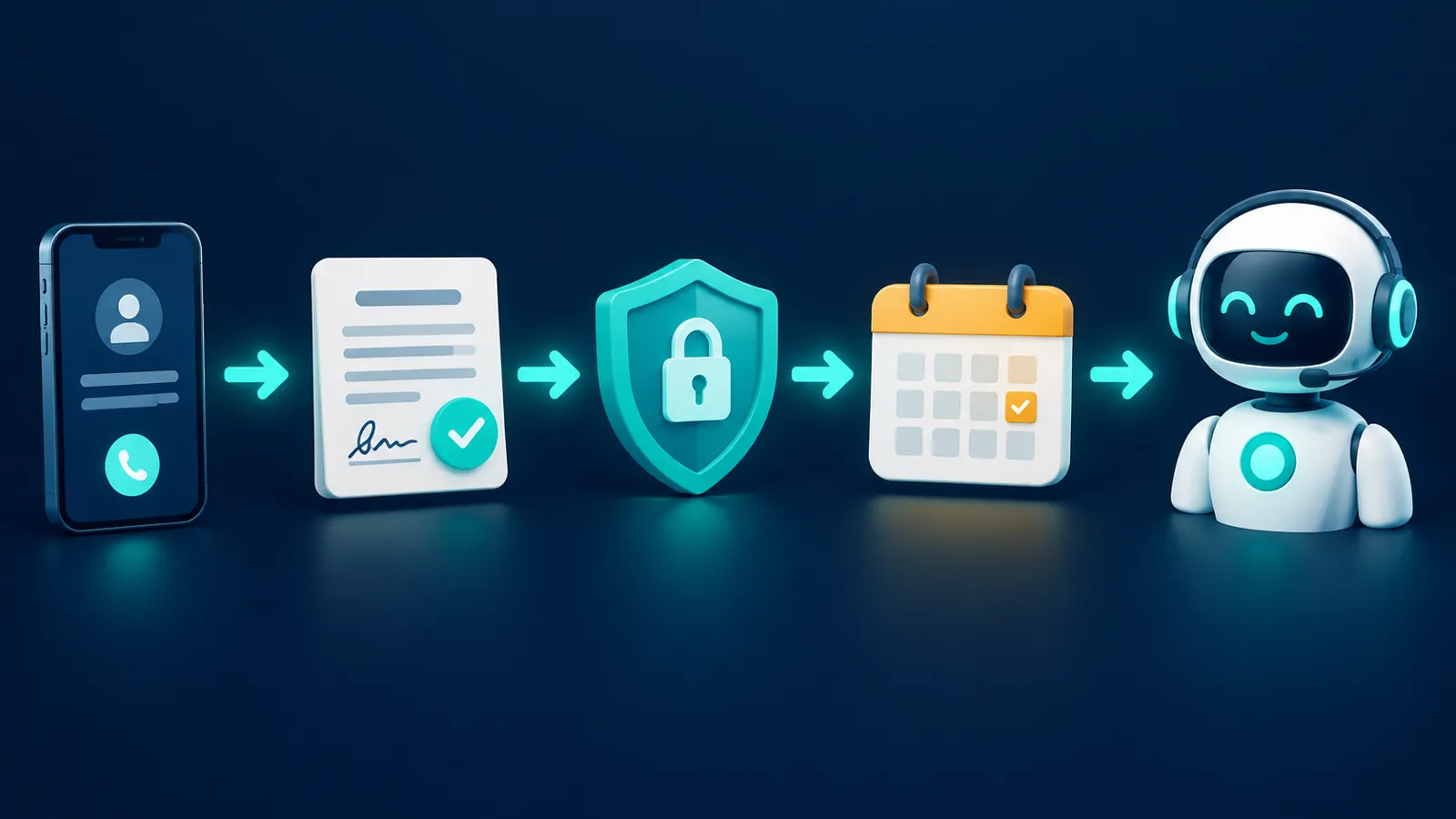
When reviewing consent, do not focus only on finding a positive flag. The explanation under which it was obtained, the business it covers and how withdrawal information is updated also matter. If the reviewer cannot access the source, they must not mark the check complete. The people a sales team wishes to reach need not be identical to those eligible for contact. Refer excluded records and reasons to the authorized team; do not make asking for new consent during the call the standard way to repair missing evidence. Identify the approved file version so later reviews can establish which list and decision were used.
How should refusal and the internal suppression list work?
A person may say at any point that they do not want further calls. They should not have to repeat an exact keyword, explain their reason or apply through another channel for that choice to take effect. The right to refuse must be a natural exit from the conversation. Phrases such as “do not call me,” “I do not want further contact” or “remove me from the list” must stop promotion, not trigger additional persuasion. The assistant should briefly acknowledge the choice, end the relevant calling workflow and ensure that the business’s process records the refusal immediately.
An internal suppression list must be more than a note attached to a spreadsheet. Design checks when preparing new lists, reviewing queued calls and deciding whether to retry. A refusal must not disappear when the same number arrives from another source. Keep its scope understandable and do not narrow the person’s request. The business’s other notification and recordkeeping obligations require separate assessment; an internal suppression entry must not be assumed to replace necessary İYS actions.
An important implementation detail is distinguishing refusal from an unanswered call. Not answering does not grant contact permission, while refusal is not an ordinary outcome to retry the following day. Team members, the assistant and list preparers should use the same decision rules. If another call starts after a refusal, investigate the incident, identify its source and pause the relevant workflow. Checking list merging and retry logic, rather than changing only the conversation script, is necessary to address recurring errors.
- Stop promotion and persuasion immediately when refusal is expressed; impose no extra conditions.
- Add the number and necessary scope information to the internal suppression process; check new uploads again.
- Make queued retries respect refusal too; a record arriving from another source is not an exception.
- Share refusal information only with necessary staff; assign responsibility for separately assessing deletion and retention requests.
Calling windows, frequency and quiet hours
Even a consent-based call can be intrusive at the wrong time or when repeated too often. Reasonable calling windows and proportionate frequency are design requirements regardless of list size. Instead of assuming one universal schedule, assess applicable rules, the recipient’s location and request, and the service context. Respect the person’s stated availability. Establish protective rules for nights, holidays and sensitive periods; technical ability to place a call does not mean the timing is appropriate.
An unanswered call, a busy line, a wrong number and unwillingness to speak are different outcomes. Retry rules should distinguish them and avoid repeated attempts at short intervals. Calls from different teams using separate lists still contribute to total contact frequency. Looking only at one workflow’s settings is therefore insufficient: decide how duplicate contact will be detected across the business. If someone requests a callback at a suitable time, record its scope and review any attempts already in the queue.
Availability and permission are not interchangeable. Saying that the afternoon is convenient does not grant general consent to promotion for other purposes. Equally, valid consent does not justify ignoring a later preference not to be disturbed. Daily operational review should consider not just completed conversations but also attempts stopped because of timing and repeated contact. Assign someone to resolve uncertain time zones or conflicting records before a call starts.

Accept postponement as a valid operational outcome. If teams are judged only on completed conversations, they may keep unsuitable records queued or retry unnecessarily. Daily review should therefore examine why calls were not placed. Conflicting availability, recent contact and an unconfirmed callback request need different remedies. A single waiting label can lead the next person to make the wrong decision. Notes should be brief without hiding the reason. Protection against unwanted disturbance must survive transfers between teams; a new file must not reset contact history.
KVKK: legal basis, privacy information and data minimisation
Telephone numbers, conversation content, appointment details and call outcomes can contain personal data. Under KVKK, assess each processing activity’s purpose, legal basis, access permissions and retention approach separately. Privacy information is not explicit consent: informing someone and obtaining valid consent for a particular processing activity are different obligations. Likewise, a KVKK legal basis or privacy notice does not replace commercial communication consent. Assuming that compliance in one area resolves every obligation can leave hidden gaps in the process.
Include only the fields genuinely needed for the call’s purpose. An assistant confirming an appointment time may not need the entire correspondence history or unrelated customer notes. What happens when the wrong person answers is particularly important: explain the business identity and general purpose without unnecessarily revealing sensitive details. Assess identity verification according to the use case; a conversation asking for excessive personal information can itself create risk. Decisions about what data is visible to whom should come before selecting a ready-made script.
When preparing a workflow with Sesla AI Technologies, the business should assess its data-controller responsibilities and relevant service relationships with its advisers. Examine where data is processed, who accesses it, whether transfers occur and any applicable transfer conditions against the actual arrangement. This article makes no claim about a particular hosting location, certification or automatic legal compliance. Decide which team handles requests for information, correction or deletion. Avoiding unnecessary collection is a more manageable starting point than trying to clean up extensive records later.

Use privacy explanations that a person can follow during a conversation. Reading a long text quickly does not make it understandable. Decide what is explained verbally, how detailed information is accessed and which team answers questions. Turkish, English and German versions do not automatically preserve identical scope; check purpose and data categories in translations too. Define when the assistant must refer a legal question to authorized staff rather than offer a definitive interpretation. Do not close a rights request as a routine service question. Provide a follow-up route that accurately explains receipt and referral to the responsible person.
Assess voice recordings and call summaries separately
Sesla AI Technologies can support follow-up through call summaries and recordings, but availability of a feature does not make its use appropriate in every conversation. Voice recording needs separate assessment of purpose, legal basis, privacy information, access and retention. An announcement that a call is recorded is not a legal basis by itself. Decide in advance how to handle the conversation if the conditions for recording are not met. Review recording independently of commercial communication consent and make sure the necessary explanations are genuinely understandable.
A call summary should not be designed as a detailed copy of everything said. The subject, customer preference, completed action and next step for the human team are often more useful fields. A summary can still contain personal data and requires accuracy checks. Do not turn an uncertain statement into definite acceptance, an expressed request into an assumed completed action or an opinion into consent. While the AI telephone calling guide expands the technical discussion, legal and operational decisions remain with the business.
Do not determine retention merely on the assumption that something might be useful later. Recordings and summaries may have different needs, and access boundaries and deletion processes should reflect them. Define how access changes when an employee leaves or changes role. Reduce unnecessary personal details when sharing example conversations for review. An objection to recording does not remove other data-processing activities or information obligations; assess each issue separately and provide an understandable response path.
Illustrative dialogue and human handoff
Even when outbound calling uses AI, the recipient should understand who is calling, why and that they may decline. The following dialogue is entirely illustrative, not a real customer interaction; it assumes a promotional call with prior consent and all necessary checks completed. The assistant identifies itself as the business’s AI assistant. Lack of interest is not an opportunity to ask more questions. The objective is not the longest possible conversation, but an interaction with clear boundaries that respects the person’s preference.
- Illustrative assistant: Hello, I am the AI assistant calling on behalf of Example Business. I am calling about service information you consented to receive. If now is inconvenient, we can end the call; you may also tell us you do not want this type of call.
- Illustrative recipient: Do not call me. I do not want further calls about this.
- Illustrative assistant: Understood. I am recording your preference not to receive this type of call and ending the conversation. Goodbye.
- Illustrative operational result: Record refusal immediately, reflect it in suppression checks and stop relevant queued calls. Verify these steps in the business’s configured process.
Human handoff is not merely a last resort when the assistant cannot answer. Someone may ask for an employee, raise a complex objection or request an action outside the automated workflow. Define what information passes to the team and the concise context needed so the person does not have to repeat everything. If no employee is available, do not describe an incomplete transfer as completed. If taking a callback request, clearly record its purpose, preferred time and follow-up owner.
Sesla AI Technologies can support Turkish, English and German communication through telephone, WhatsApp, Instagram messaging and web chat assistants. Permission or preference in one channel does not automatically extend to another. Do not invent a new justification to follow a telephone refusal with promotion through another channel. An inbound call handling workflow can be designed separately. If Google Calendar appointments are used, the assistant must distinguish a time discussed from an appointment actually created, and verify the action before claiming completion.

Step-by-step implementation and acceptance testing
Instead of testing setup by calling real recipients, first validate decision rules with controlled test records. The business owner, operations lead and legal reviewers should examine the same workflow version. One successful example conversation is not a sufficient acceptance criterion; also test stopping conditions such as refusal, uncertain consent, wrong recipients and unsuitable timing. A call center automation plan needs clear business rules as well as technical connections. Writing the expected behavior before each test prevents changing the outcome criteria after seeing the result.
- 1. Write the purpose and scope: Separate transactional notices from promotion and state which actions the conversation must not perform.
- 2. Verify the data source: The business checks consent and İYS status before uploading and separates uncertain records.
- 3. Prepare refusal and timing rules: Make suppression, queued calls and retries follow the same decision.
- 4. Review scripts and knowledge content: Assess business identification, purpose, refusal options and human handoff together.
- 5. Run controlled acceptance tests: Test refusal, wrong recipients, conflicts and action failures as well as positive examples.
- 6. Resolve findings and approve: Record owners, corrections and retest results; do not start with critical findings unresolved.
- 7. Monitor use: Rerun the relevant tests whenever wording, list sources or business rules change.
| Test case | Expected behavior | Verification evidence |
|---|---|---|
| Uncertain consent or İYS status | Exclude from the calling list and refer for business review. | Record the eligibility decision’s source and owner. |
| Person says do not call me | Stop promotion, record refusal immediately and block relevant queued calls. | Check suppression and retry outcomes together. |
| Quiet hours or excessive retries | Do not initiate; review timing and contact history. | Compare the test record with the expected stopping decision. |
| Wrong person answers | Do not reveal unnecessary personal details; end the workflow safely. | Review wording and the scope of disclosed information. |
| Transfer or calendar action fails | Do not claim completion; define the human follow-up step. | Compare the conversation outcome with the actual action status. |
Do not keep test outcomes only as pass or fail. Explain which wording was used, which record was tested and where behavior diverged from the expected decision. Observe both whether suppression survives a new upload and whether a queued call stops after refusal. Following a correction, rerun the related positive scenario as well as the failed example. This helps reveal whether fixing one issue has disrupted another decision path. Avoid unnecessary duplication of personal data used in testing and keep access controlled.

Review responsibilities continue after deployment. A new service name, changed callback form or list from another team may affect previously tested assumptions. Assess a change by its effect on purpose and decision rules, not by how small it looks. Give staff a straightforward way to report concerns. Define when a report pauses the workflow and who investigates. Record corrections, retested scenarios and unresolved issues afterward. Examining data sources, wording and decision paths together is more informative than dismissing a problem as individual carelessness.
How should cost and operating scope be compared?
Comparing the cost of an automated customer calling system solely by call volume is incomplete. Consider the business effort required for workflow preparation, content maintenance, consent and list review, human follow-up, testing and ongoing assessment. Check the current plan to understand which usage and features are included. Rather than offering fixed amounts or hypothetical financial gains, it is more meaningful to ask whether the plan’s scope matches the need. Not calling refused or ineligible records is not a commercial shortfall; it is an expected outcome of sound decision rules.
| Plan | Monthly | Annual (per month) | Included minutes | Extra minute | Setup on annual |
|---|---|---|---|---|---|
| Starter Plan | $59.99 | $44.99 | 120 min | $0.25 | Paid |
| Professional Plan | $129.99 | $97.49 | 300 min | $0.23 | Paid |
| Enterprise Plan | $259.99 | $194.99 | 600 min | $0.22 | Free |
| Premium Plan | $519.99 | $389.99 | 1,200 min | $0.15 | Free |
- Scope: Which purposes, languages, channels and handoff needs are genuinely necessary? Remove unnecessary data fields and conversation branches.
- Responsibility: Who owns consent checks, refusal follow-up, content updates and personal-data requests? Document those duties.
- Operations: Who pauses a workflow after an incorrect outcome, unsuitable timing or wrong record? Define restart conditions.
- Review: Look beyond conversation counts to correct classification, preference handling and follow-up of incomplete actions.
During an evaluation, do more than listen to a sample voice. Ask what happens in the same scenario when consent is refused, a record cannot be found or a transfer cannot be completed. The article What is an AI call center? can explain the fundamentals, but purchasing and deployment decisions should rest on your actual process. Find out who approves content changes and how a new purpose enters an existing workflow. If the purpose expands, reassess the legal position and data needs before merely adding another sentence to the script.
Conclusion: Permission and boundaries before automation
An automated customer calling system does not replace a business’s permission-based communication process; it can help apply that process through clear, reviewable rules. Classify the purpose first, complete prior-consent and İYS checks for promotion, implement refusal immediately and preserve internal suppression records. Assess KVKK, privacy information, data access and voice recording separately. Once timing, frequency, human handoff and acceptance tests validate the boundaries, evaluate your own use case with Sesla AI Technologies. Consult counsel on specific legal decisions; resolve uncertain records or critical findings before initiating calls.
Frequently asked questions
Does automation remove the need for consent?
No. Promotional and marketing calls may fall under Law No. 6563 and the relevant Regulation. Automation or AI does not create an exemption; prior consent and İYS checks should be foundational.
Does Sesla AI Technologies check İYS directly?
This guide makes no claim of direct İYS integration. Before uploading lists, the business must check İYS status and its own consent records and separate ineligible or uncertain entries.
Is an appointment reminder the same as a promotional call?
They should not be treated as equivalent. Transactional information limited to a specific appointment, order or requested callback may be assessed differently. Adding promotion can change the classification; review the actual script with counsel.
Does an existing customer or B2B relationship give blanket permission?
Not by itself. How the rules apply to the recipient and communication type needs separate assessment. Do not treat an existing relationship as universal consent for every channel and promotional purpose.
What happens when someone says do not call me?
Stop promotion and persuasion immediately, implement refusal at once and maintain an internal suppression record. New lists and queued retries must respect it; any other required İYS actions remain separate responsibilities.
Does a KVKK privacy notice replace communication consent?
No. A KVKK legal basis and privacy information obligations are distinct from commercial communication consent. Privacy information is not explicit consent; assess which obligation applies to each activity separately.
Is a recording announcement sufficient on its own?
No. An announcement alone does not create a legal basis. Assess the recording’s purpose, legal basis, privacy information, access and retention separately, and decide beforehand what happens if recording conditions are not met.
How should calling times and retries be set?
Assess applicable rules, the recipient’s location, service context and individual preferences. Timing and frequency must be reasonable; calls from different teams to the same number also count toward total contact.
When should the assistant hand over to a human?
Plan human handoff when the person requests an employee or the issue exceeds the defined automation scope. Do not claim a transfer succeeded if it did not; record the follow-up owner and any requested callback.
What should be tested before deployment?
Use controlled records to test uncertain consent, refusal, quiet hours, wrong recipients, retries and failed actions. Document outcomes, resolve critical findings and confirm the specific legal assessment with counsel.
Describe your needs in 3 minutes and we prepare your assistant draft and quote.
Hear our next-generation voice AI in the live demo.Try the live demo →