
AI receptionist for real estate agencies: turning listing calls into viewings
Buyers call the moment they see a listing. A real estate AI assistant answers while agents are out, qualifies the buyer and books the viewing.
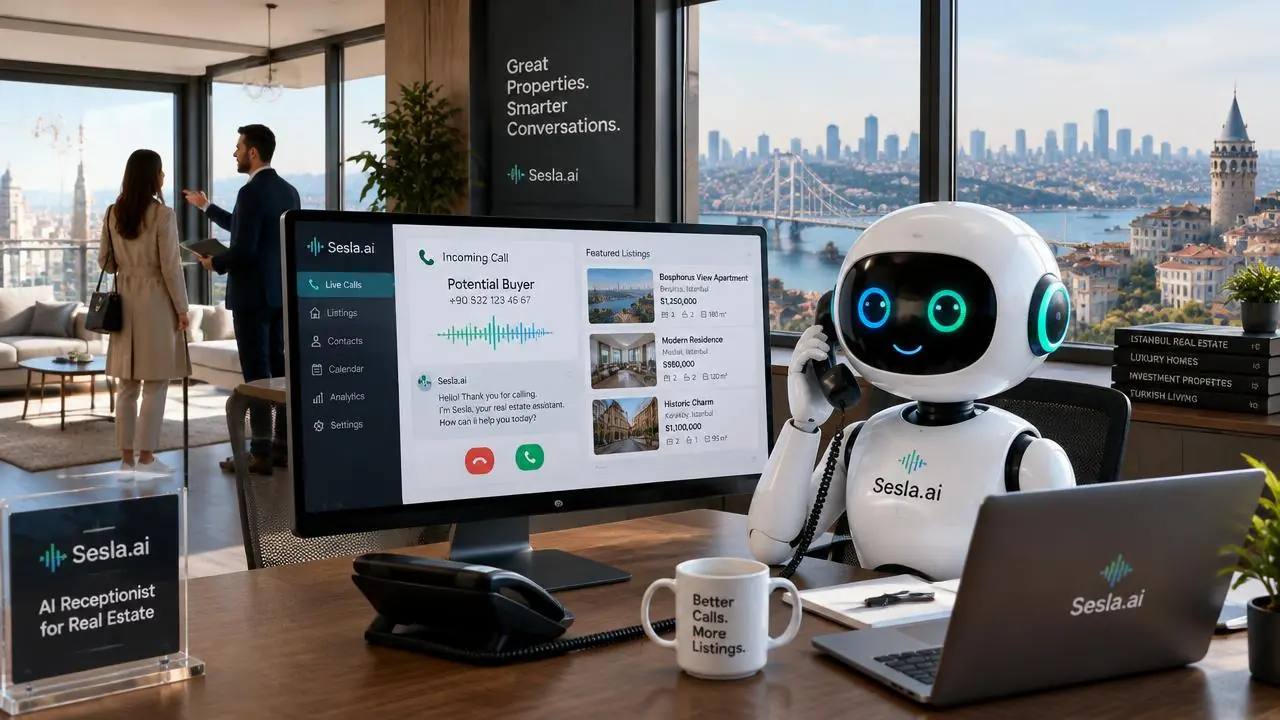
In the real estate sector, sales often start with a single phone call. As soon as a buyer or renter sees an apartment they like on a listing portal, they call and want an immediate answer. The agent, however, is most likely at another showing, at the land registry office, or on the road. If the phone isn't answered, the prospect calls the next listing in the same area and often never returns. In this guide, we explain in detail why real estate offices miss listing calls, the financial cost of this loss, how an AI phone assistant transforms this process, and how to set up Sesla step-by-step.
Why do real estate offices miss listing calls?
Real estate agency is a field-based job. A large part of an agent's day is spent on showings, portfolio shoots, appraisal appointments, and title deed transactions. An agent sitting at a desk in the office is actually experiencing hours that are not generating income. Therefore, the busiest working hours almost always coincide with the times the phone rings the most. Evenings and weekends are when buyers are most comfortable calling, and agents are trying to rest.
The second problem is the nature of listing calls. A significant portion of incoming calls contain the same questions: Is the apartment still for sale, what are the dues, is there parking, is it eligible for credit, when can I see it? When an agent answers the phone for each of these, part of their day is spent providing repetitive information. If they don't answer, they lose a hot buyer. This dilemma is one of the most invisible obstacles to the growth of real estate offices.

The true cost of a missed listing call
The value of a single transaction in real estate can be equal to the total sales made over months in many other sectors. The service fee received for a residential sale or the commission from a rental transaction shows how costly a single missed call can be. Moreover, the budget spent on premium listing packages on portals and social media ads also goes to waste with every unanswered call.
| Item | Small office | Medium-sized office | Multi-branch office |
|---|---|---|---|
| Monthly listing calls | 250 | 700 | 2,000 |
| Missed call rate | %30 | %25 | %20 |
| Missed calls | 75 | 175 | 400 |
| Conversion rate to showing | %15 | %15 | %15 |
| Lost showings | 11 | 26 | 60 |
| Conversion rate to transaction | %10 | %10 | %10 |
| Lost transactions / month | ≈1 | ≈3 | ≈6 |
The number of lost transactions in this table may seem small. However, when multiplied by an average commission, it reveals a figure that is several times the annual cost of an AI assistant for most offices. More importantly, a lost buyer is not just one transaction; it means a future seller, friends they will refer, and new transactions they will make over the years.
What exactly does the real estate AI assistant do?
Sesla is a voice assistant that answers your office's phone in your office's name, speaking natural Turkish. It understands which portfolio is being called about by asking for the listing number or the area where the listing is located, and answers questions such as square footage, floor, dues, heating type, and parking based on the portfolio information you provide. Then, it pre-qualifies the buyer with a few short questions and suggests a showing time that suits the agent's calendar. Our AI solution for real estate offices customizes this flow according to your office's portfolio structure.
- Listing information: number of rooms, square footage, floor, building age, dues, parking, site amenities.
- Pre-qualification: budget range, cash or credit, moving time, preferred areas.
- Showing appointment: suggestion of suitable times based on agent's calendar and confirmation message.
- Owner calls: property information and contact record of owners who want to sell or rent.
- Summary and transfer: a written summary of each conversation is sent to the agent via WhatsApp, email, or the panel.
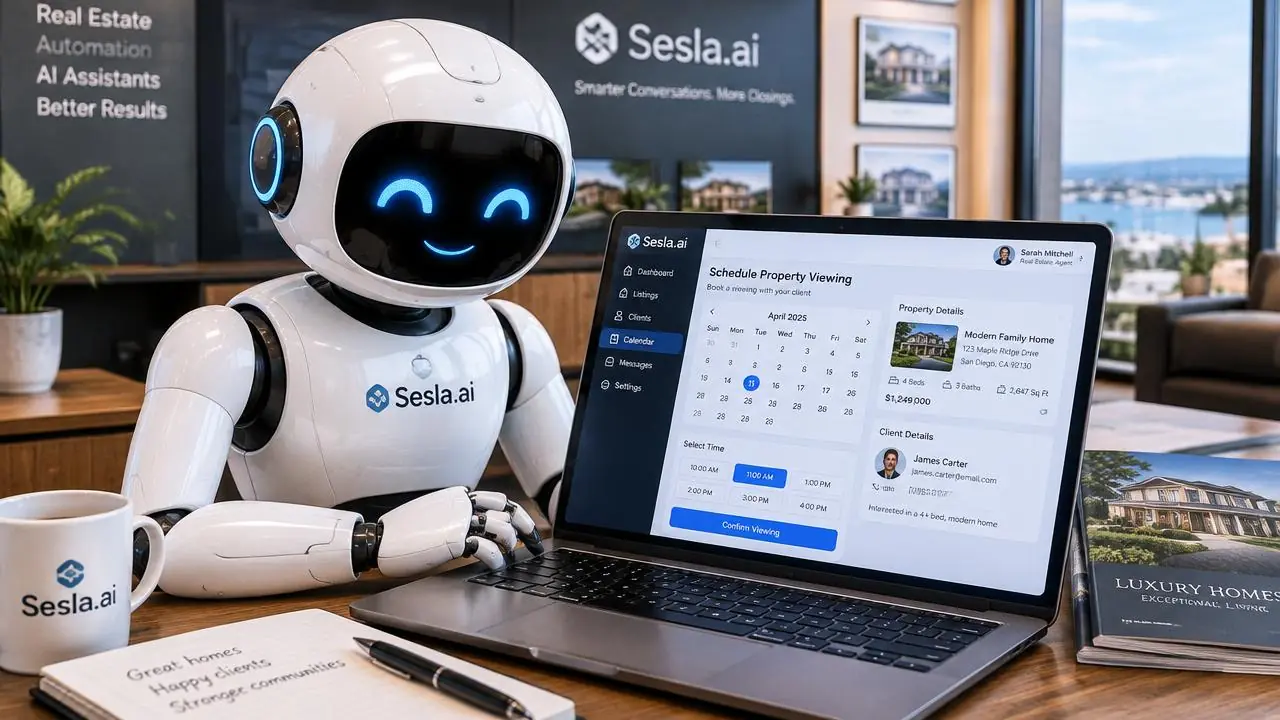
The Sesla difference: why it's not just an ordinary answering machine?
An answering machine only records messages; most callers hang up without leaving a message. Outsourced call centers do not know your portfolio and quickly become expensive with per-minute charges. Sesla fills the gap between these two models: it knows your portfolio, speaks by your rules, handles multiple calls simultaneously, and converts each conversation into a structured lead record.
| Criterion | Office secretary | Answering machine | External call center | Sesla |
|---|---|---|---|---|
| Working hours | Business hours | 24/7 recording | Contract-dependent | 24/7 active conversation |
| Portfolio knowledge | High | None | Low | As much as you provide, up-to-date |
| Pre-qualification | Depends on the individual | None | Partially | Same questions on every call |
| Viewing appointment | Yes | No | Partially | Yes |
| Simultaneous calling | 1 | Unlimited records | As many as the team | Parallel based on the package |
| Cost structure | Fixed salary | Very low | Per minute | Transparent package |
Another distinguishing feature of Sesla for real estate offices is its multilingual capability. In areas with a high concentration of foreign buyers, the assistant can converse in languages such as English, German, Arabic, and Russian. This ensures that even if the agent does not speak the language, the foreign buyer's request is fully recorded and directed to the correct agent.
Real estate office setup step-by-step
The first step in setting up is deciding how calls will be routed without changing your current number. For most offices, the most logical start is to divert calls to Sesla when the line is busy, unanswered, or outside business hours. This way, your team answers the phone first, and any missed calls go to the AI assistant. After a few weeks, the scope can be expanded based on the results.
- 1. Organize portfolio information: active listings, listing numbers, key features, and price ranges.
- 2. Determine pre-qualification questions: what information is essential before planning a viewing?
- 3. Define agent calendars and viewing rules: area, day, time slots.
- 4. Write transfer rules: which agent will handle negotiations, offers, and complaints?
- 5. Conduct test calls, review summaries, and go live.
The success of the AI assistant largely depends on keeping portfolio information up-to-date. Removing sold or rented listings from the system, processing price changes, and adding new listings prevents buyers from calling with incorrect expectations. Sesla's knowledge base allows you to make these updates in minutes.

Example call flow
At 9:30 PM, a buyer calls the office about a 3+1 apartment they saw on a listing portal. The AI assistant answers the phone with the office's name, asks for the listing number, and confirms the apartment is still for sale. The buyer asks about HOA fees and parking; the AI assistant responds based on the portfolio information. Then it asks about the budget range, whether they will use a loan, and when they want to move. Finally, it suggests two viewing times for Saturday morning, the buyer chooses one, and a confirmation message is sent.
When the agent opens their phone the next morning, they don't find a cold missed call; instead, they find a buyer record with a name, budget, loan status, and viewing time. This difference directly changes how the agent plans their day and how many deals they close.

Pricing: which package is suitable for your real estate office?
Package selection is based on monthly talk minutes and the number of simultaneous conversations required. For a single-branch office, basic packages are often sufficient; offices with multiple branches or high listing traffic benefit from higher-minute packages. The table below shows the current Sesla packages.
| Plan | Monthly | Annual (per month) | Included minutes | Extra minute | Setup on annual |
|---|---|---|---|---|---|
| Starter Plan | $59.99 | $44.99 | 120 min | $0.25 | Paid |
| Professional Plan | $129.99 | $97.49 | 300 min | $0.23 | Paid |
| Enterprise Plan | $259.99 | $194.99 | 600 min | $0.22 | Free |
| Premium Plan | $519.99 | $389.99 | 1,200 min | $0.15 | Free |
The commission from a single saved transaction often covers the annual subscription fee. To compare package and personnel costs based on your call volume, you can use the calculator on the pricing page and download the result as a management report.
How to measure success with which metrics?
- Answer rate: what percentage of incoming listing calls were answered?
- Conversion to viewing rate: how many answered calls converted to a viewing appointment?
- Number of leads captured outside business hours: evening and weekend calls previously lost.
- Number of viewings per agent: more qualified viewings with the same team.
- Number of transactions and average closing time.
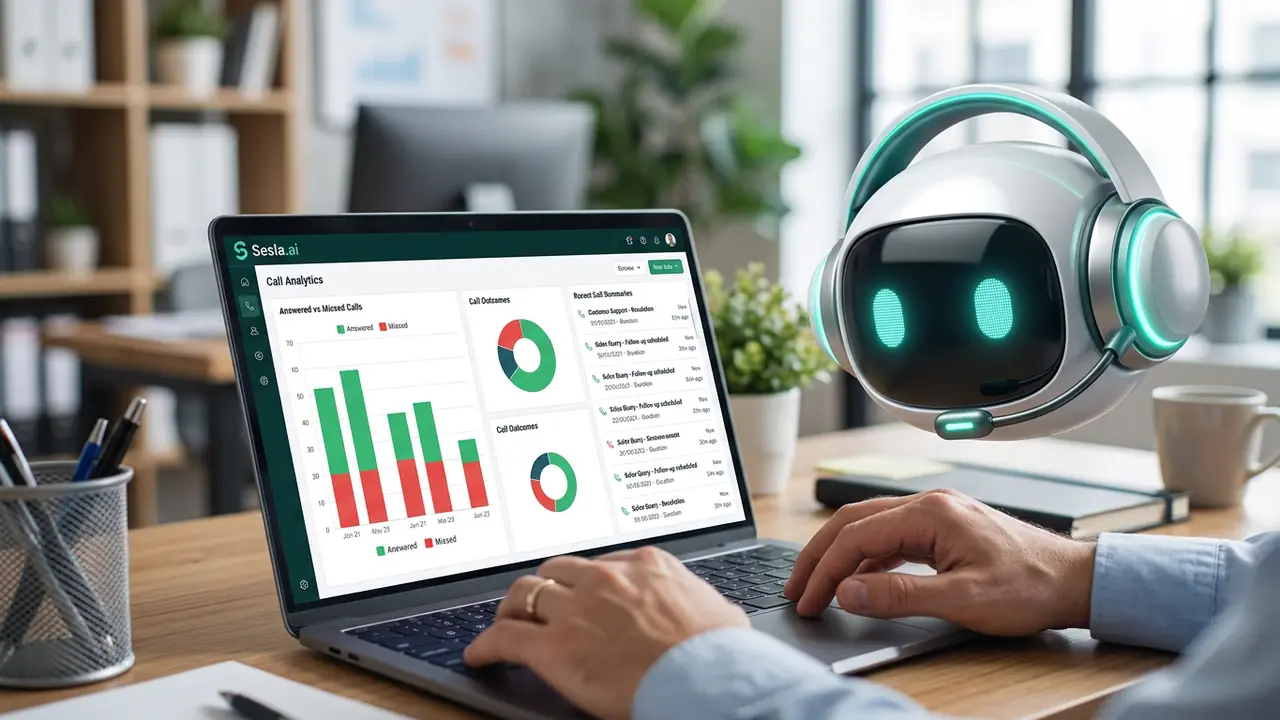
Comparing these metrics with the three months before the AI assistant clearly shows the impact of the investment. Since Sesla's reporting screen collects the summary, result, and duration of each call in one place, you don't need to keep a separate table for this comparison.
Common mistakes made by real estate offices
The most common mistake we see is launching the AI assistant with incomplete portfolio information. The AI assistant only speaks with the information you provide; if HOA or parking information is missing, it cannot give a clear answer to the buyer and will have to leave a note for the agent. The second mistake is making the pre-qualification questions too long. Instead of interrogating the buyer, getting the four or five pieces of information truly necessary for a viewing improves both the experience and conversion.
The third mistake is not following up on appointments made by the AI assistant. The AI assistant plans the viewing, but the agent needs to confirm the appointment and arrive on time. Offices that integrate Sesla's summaries into their daily routine see the highest increase in conversion within the first month. To hear the AI assistant's voice and speaking style before deciding for your office, you can try the live demo on our AI call center and voice assistant homepage.
Effectively managing listing portal traffic
A large portion of calls to real estate offices come from listing portals. A common characteristic of these calls is that the buyer is looking at multiple listings simultaneously. The buyer likes a listing, calls the number; if unanswered, they move on to the next similar listing on the list. Therefore, in portal traffic, response speed is as decisive as the listing's price and photos. How beautiful a listing is loses its importance if the phone is not answered.
The AI assistant identifies which portfolio is being discussed by asking for the listing number or a brief description of the listing during the incoming call. This information allows you to measure how many calls each listing received and how many converted to viewings. This way, you can see with data which listing's price is too high, which has insufficient photos, or in which area demand is increasing. This data also strengthens the agent's hand in price discussions with property owners.
Another benefit for offices is the systematic creation of a buyer database. Every buyer recorded by the AI assistant accumulates in a list with their budget, desired number of rooms, and area. When a new portfolio arrives, it is possible to quickly reach suitable buyers by looking at this list. This way, initial viewings can be planned even before a listing appears on the portal.

Difference between rental and sales calls
Calls for rental listings are generally more intense and involve quicker decisions than calls for for-sale listings. Prospective tenants usually want to move quickly and decide within a few days. Therefore, for rental portfolios, the AI assistant's task is to quickly identify suitable candidates by asking about the move-in date, number of occupants, pet status, and deposit expectations. Special conditions from the property owner can also be added to the knowledge base, allowing unsuitable candidates to be politely informed from the start.
For for-sale portfolios, the decision process is longer, and the buyer asks more questions. Information such as title deed status, occupancy permit, condominium ownership, loan eligibility, and building age comes to the forefront. The AI assistant provides answers to these questions from the portfolio information; for technical matters it doesn't have information on, it states that the agent will provide detailed information. This way, the buyer is not misinformed, and the agent starts the meeting confidently.
Commercial real estate and land calls are fewer in number but higher in value. In these calls, the AI assistant's role is less about getting into detail and more about recording who the caller is, what their purpose is, and when they want to meet, then prioritizing the transfer to a specialized agent.
Real estate office 30-day roadmap
The first week should be planned as a trial period where the AI assistant only handles calls outside business hours and unanswered calls. During this period, agents read the incoming summaries each morning and verify the information provided by the AI assistant. If an incorrect or missing answer is noticed, the portfolio information is immediately updated. In the second week, pre-qualification questions are reviewed: which question is unnecessary, and what information is missing? In the third week, viewing calendar rules are clarified, and the AI assistant's appointment suggestions align perfectly with the agents' actual availability.
The fourth week is when results are measured for the first time. The number of calls handled by the AI assistant, the number of viewings generated, and how many of those viewings materialized are calculated. Most offices at this point see for the first time what a large share evening and weekend calls, which were previously unrecorded, constitute. This data also forms the basis for the decision to expand the AI assistant's scope to daytime hours.
Agents' routine for working with the AI assistant
In the most efficient offices, agents start their day with the AI assistant's summary list. Buyers who called overnight are sorted by budget and urgency, and hot leads are called during the first hours of the morning. An agent in the field during the day sees new requests instantly via WhatsApp summaries sent by the AI assistant and responds the same day if suitable. This routine reduces the time an agent spends on the phone while increasing the number of qualified conversations.
- Morning: read overnight summaries, prioritize hot leads.
- Noon: check WhatsApp summaries from the field, confirm viewing changes.
- Evening: remove sold or rented listings from the knowledge base.
- Weekly: review listing-based call and viewing report.
Example return on investment scenario
Let's consider an office with three agents. They receive approximately 600 listing calls a month and miss a quarter of them. When the AI assistant is implemented, most of the 150 missed calls are answered; even if only a small portion of these convert to viewings, and a small portion of viewings convert to transactions, the office reaches the potential to gain at least one additional transaction per month. Since the commission from a single transaction is well above the AI assistant's monthly cost, the investment usually pays for itself in the first few months. Performing this calculation with your average commission will clarify your decision.
The second gain to consider is the agents' time. When hours spent on repetitive listing questions are redirected to viewings, portfolio acquisition, and property owner meetings, the office's overall productivity increases. Although this gain may not be directly visible on the invoice, it manifests in portfolio size and transaction numbers within a few months.
10-item checklist for real estate offices to get started
- Calculate the number of listing calls and missed calls from the last 30 days.
- List your active portfolio with listing numbers, prices, and key features.
- Limit pre-qualification questions to a maximum of five.
- Determine the days and times when agents can conduct viewings.
- Write down who will handle negotiation and offer requests.
- Prepare a separate information set for property owner calls.
- Determine which languages are necessary for foreign buyers.
- Assign responsibility for daily updates of sold and rented listings.
- Choose which channel and to whom summaries will go.
- At the end of the first month, review the listing-based call and viewing report.
An office that completes this list comes prepared for the setup meeting, and the AI assistant is often launched within a few days. Most items on the list are information the office already knows but hasn't formalized; organizing them once also simplifies the onboarding of new agents.
Remember: the AI assistant's biggest contribution is protecting the agent's valuable time in the field from the pressure of phone calls.
Conclusion: Every listing call is a viewing opportunity
Growth in real estate offices begins not with getting more listings, but with not missing incoming calls. An AI phone assistant does not replace the agent; it protects the time the agent spends in the field and delivers ready, qualified buyers to them. With Sesla, your office gains a 24/7 front desk, and your agents can focus on what they do best: closing deals.
Frequently asked questions
What does an AI assistant for real estate offices do?
It answers incoming listing calls when agents are in the field, asks about the buyer's budget, area, and credit status, creates a showing appointment, and relays the summary to the agent.
Does the assistant negotiate or make offers?
No. Negotiation, offers, and contract matters always remain with the agent; the assistant notes these requests and passes them to the relevant agent.
How do I keep my portfolio information up-to-date?
You can add listings to Sesla's knowledge base, remove sold properties, and update price changes in minutes.
Do I need to change my existing office number?
No. Busy, missed, and after-hours calls are transferred to Sesla via operator routing; your number remains the same.
Can it speak with international buyers?
Yes. Sesla can conduct conversations in many languages, including English, German, Arabic, and Russian, in addition to Turkish.
How are showing appointments scheduled?
Agents define their available days and time slots; the assistant suggests options from these slots and conveys the confirmed appointment to the agent.
Does it also answer owner calls?
Yes. Property information and contact details of owners who want to sell or rent are collected and passed to the portfolio agent.
What happens with simultaneous incoming calls?
Multiple conversations are handled in parallel according to your package; callers will not hear a busy signal.
How long does setup take?
If portfolio information is ready, basic setup is usually completed within a few days. Expert setup is free for Corporate and Premium packages with annual subscriptions.
How is buyer data protected?
Only necessary information is collected; access permissions and retention periods are determined with your office, and a flow compliant with GDPR/KVKK disclosure obligations is established.
Which package should I choose?
It is determined by your monthly listing calls and average call duration. The calculator on the Pricing page automatically suggests the most suitable package based on your minute needs.
Describe your needs in 3 minutes and we prepare your assistant draft and quote.