
The real cost of missed calls and a 24/7 answering strategy
An unanswered call often means a customer who moves on to a competitor. This guide shows where missed calls come from and how to catch them.

When a business's phone rings, the person on the other end is often at a moment of decision: they want to book an appointment, ask for a price, place an order, or solve a problem. When this moment is not answered, the loss is not just a single conversation. The person will most likely call the next business on the list and proceed with them. In this guide, we explain step-by-step how to calculate the true cost of missed calls, how to identify when and why you miss calls, and how to close this gap with AI-powered call answering.
Why are missed calls more expensive than you think?
Most business owners think of unanswered calls as "we'll call them back later." However, when a callback is made, a significant portion of customers either don't answer the phone or have already taken their business elsewhere. Especially in urgent needs — plumber, locksmith, vet, toothache, car breakdown — the customer cannot wait. The first one to answer wins.
The second layer of cost is reputation. A business whose phone cannot be reached is perceived by the customer as "uninterested" or "busy, doesn't care about me." This perception is reflected in Google reviews, recommendations, and repeat purchase rates. So, a single missed call can also take away that customer's lifetime value and the recommendations they would make to others.
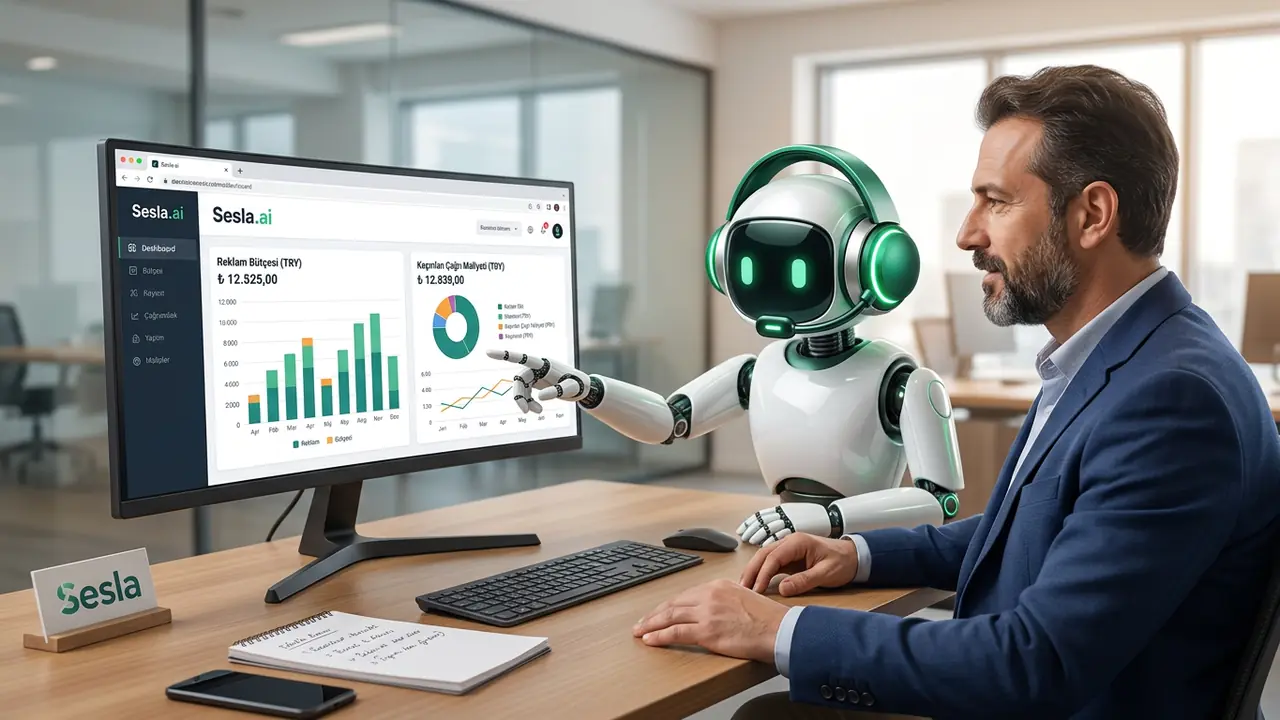
The third layer is the advertising budget. You already paid for every call coming from Google Ads, Meta, or map ads. Not answering these calls means throwing away a paid lead. Even if the cost-per-click seems low in the ad panel, unanswered calls silently multiply your acquisition cost.
How is the cost of a missed call calculated?
You need four pieces of data for the calculation: the total number of incoming calls per month, the percentage of these that were unanswered, the percentage of answered calls that converted to a sale or appointment, and the amount an average sale or appointment brings you. Most of this data is already available in your operator panel, PBX report, or phone call history.
- Step 1: Extract the number of incoming calls and missed calls for the last 30 days.
- Step 2: Count how many of the answered calls converted to an appointment, order, or quote request and find the rate.
- Step 3: Determine the average customer value (one-time sale or total spending in the first year).
- Step 4: Apply the formula: Missed calls × conversion rate × customer value.
- Step 5: Multiply the result by 12 to see the annual potential loss.
For example, if a dental clinic receives 600 calls per month and misses 22% of them, 132 calls remain unanswered per month. If 30% of these calls could convert into an examination appointment and the average value of the initial treatment plan is $1,500, the potential monthly loss amounts to $59,400. The figure may seem exaggerated; however, when the calculation is made entirely with the clinic's own data, similar magnitudes often emerge.
| Industry | Missed calls / month | Conversion rate | Average value | Estimated monthly loss |
|---|---|---|---|---|
| Dental clinic | 132 | 30% | $1,500 | $59,400 |
| Real estate office | 80 | 10% | $2,500 commission | $20,000 |
| Restaurant (reservations) | 200 | 60% | $100 | $12,000 |
| Technical service | 120 | 40% | $150 | $7,200 |
| Beauty salon | 90 | 35% | $200 | $6,300 |
When and why are calls most often missed?
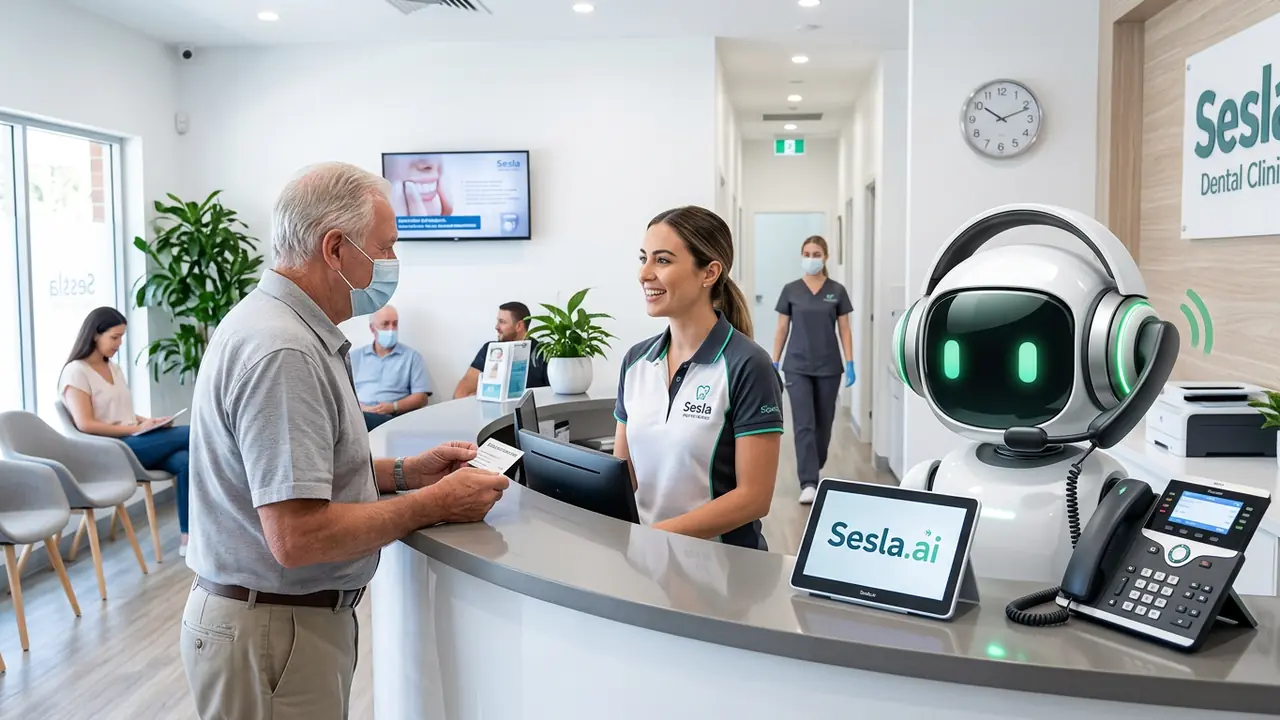
The reason for missing calls is rarely disinterest. Most of the time, the team is busy with another customer. While the receptionist is checking in a patient, the technician is working in the field, the lawyer is in court, or the waiter is during busy service hours, the phone falls to second priority. The problem is not with people, but with capacity.
Four riskiest time frames
- Lunch break (12:00–14:00): Customers call during their breaks while the team rests.
- After hours (18:00–22:00): These are the most convenient times for working customers to call.
- Weekends and public holidays: Demand continues, but the team is absent.
- Peak periods: Calls arriving simultaneously queue up on a single line, and a busy signal is heard.
In many businesses, one-quarter to one-third of incoming calls arrive outside of business hours. This means that the most eager leads — people who research and decide in the evening — call exactly when no one is answering the phone. By the time they are called back in the morning, the decision has already been made.

Ways to reduce missed calls
To solve the problem, there are three classic options: hiring additional staff, working with an outsourced call center, or using an answering machine. Each has its place, but each also has significant limitations. Additional staff brings high fixed costs and is still limited by business hours. An external call center won't know your business well enough, and per-minute or per-call fees quickly add up. An answering machine records the message but solves nothing for the customer; most people hang up without leaving a message.
The fourth and most rapidly growing option in recent years is AI-powered call answering. Here, a voice assistant speaking natural Turkish answers the phone; it understands what the customer wants, answers frequently asked questions, finds suitable times to create appointments, and, if necessary, transfers the call to the right person. AI phone assistant is therefore more like an untiring front office employee than an answering machine.
| Criterion | Additional staff | Outsourced call center | Answering machine | Sesla AI assistant |
|---|---|---|---|---|
| Working hours | Business hours | Contractual | 24/7 recording | 24/7 active response |
| Concurrent calls | 1 | As per team size | Unlimited recording | Parallel based on plan |
| Business information | High | Limited | None | With the information you provide |
| Appointment scheduling | Yes | Partially | No | Yes, with calendar link |
| Monthly cost | High and fixed | Medium-high, variable | Very low | Low, package-based |
| Reporting | Manual | Variable | None | Summary of each conversation |
How does Sesla get call loss close to zero?
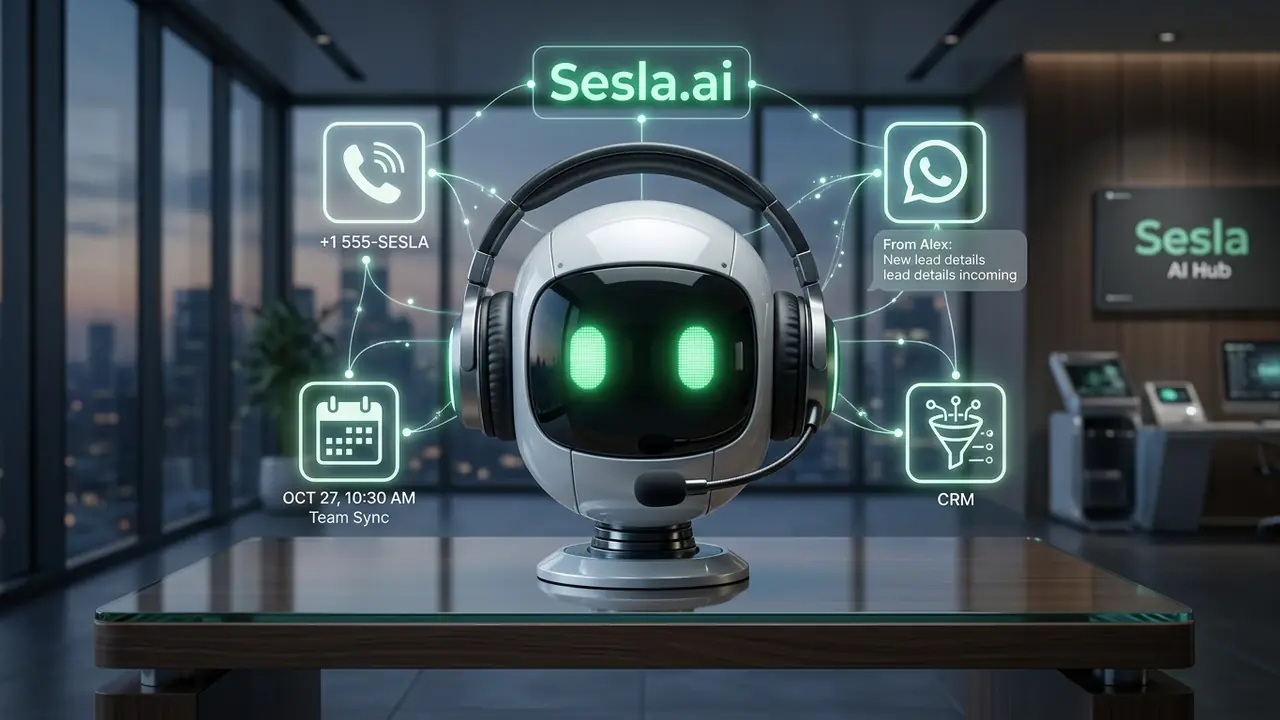
Sesla can work without changing your existing number. Calls are forwarded to Sesla when busy, unanswered, or outside business hours. The AI assistant answers the phone with your business name, speaks using your approved information, and relays the outcome to your team via WhatsApp, email, or a dashboard. If asked a question it doesn't know, it doesn't guess; it gathers information from the customer and leaves a note for your team to follow up.
- Answers the phone on the first ring, no waiting, no busy tone.
- Collects appointment, reservation, and callback requests in a structured manner.
- Forwards a written summary of each conversation and customer information to the team.
- Transfers the call to a person according to your defined rules for urgent or sensitive situations.
- Can respond in languages such as English, German, and Arabic, in addition to Turkish.
Setup typically begins with describing your business: your services, operating hours, price ranges, and frequently asked questions. This information is integrated into the AI assistant's knowledge base, tested with example conversations, and goes live upon your approval. To experience how the process works and hear the AI assistant's voice yourself, you can use the live demo on the Sesla homepage.
Pricing: How much does it cost to prevent missed calls?
The cost of AI phone answering is determined by the monthly talk time and the number of AI assistants you need. The table below shows the current Sesla packages; values are automatically pulled from the single pricing source on the site. For annual payments, the monthly equivalent decreases, and onboarding support is included with certain packages.
| Plan | Monthly | Annual (per month) | Included minutes | Extra minute | Setup on annual |
|---|---|---|---|---|---|
| Starter Plan | $59.99 | $44.99 | 120 min | $0.25 | Paid |
| Professional Plan | $129.99 | $97.49 | 300 min | $0.23 | Paid |
| Enterprise Plan | $259.99 | $194.99 | 600 min | $0.22 | Free |
| Premium Plan | $519.99 | $389.99 | 1,200 min | $0.15 | Free |
When you compare these amounts to your calculated monthly loss, you'll see that a single recovered appointment or sale often covers the monthly package cost. To compare package and staff costs based on your call volume, you can use the calculator on the pricing page and download the result as a PDF report.
How should you measure the results?
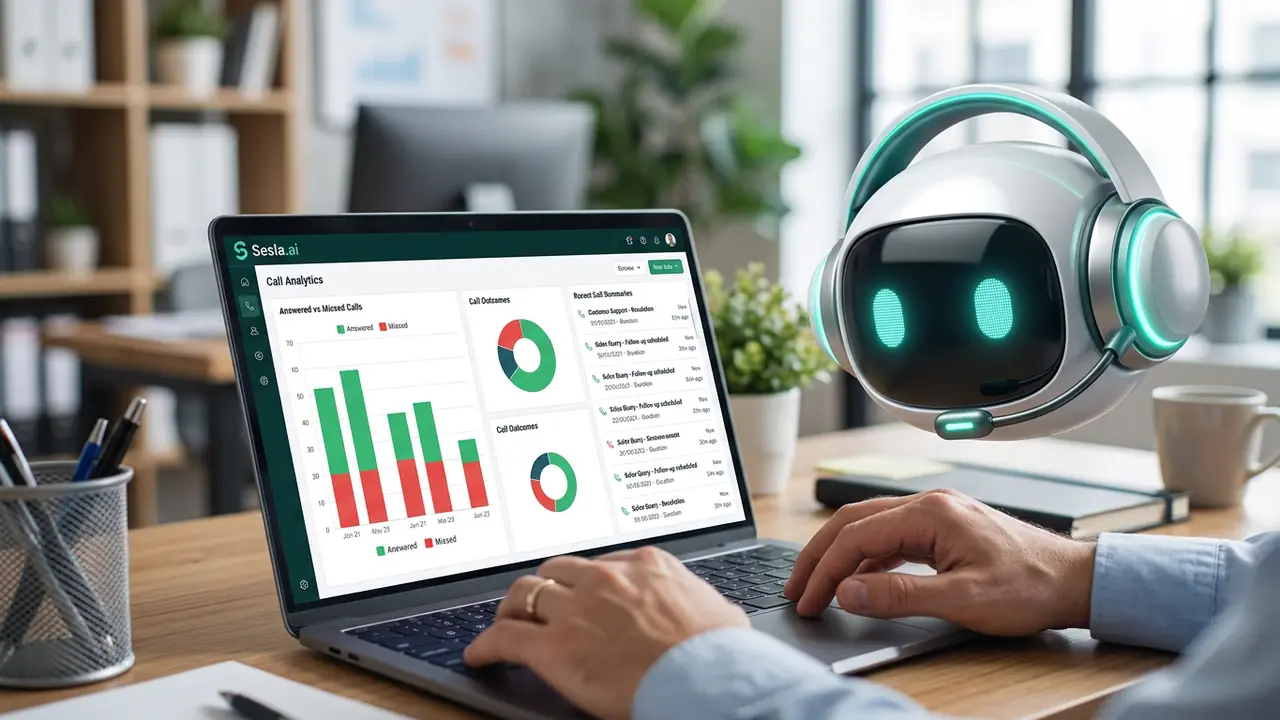
After adopting AI phone answering, we recommend tracking three metrics: answer rate (target 95% and above), call-to-appointment or request conversion rate, and the number of requests captured outside business hours. Comparing these three data points with the pre-transition period clearly demonstrates the return on investment.
The second dimension of measurement is quality. Reviewing call summaries weekly and examining which questions the AI assistant transferred to the team allows you to continuously improve the knowledge base. Within a few weeks, you'll see the transfer rate decrease and the AI assistant completing more requests independently.

Missed call scenarios by industry
The impact of a missed call manifests differently in each industry. While the same formula applies, the urgency of the customer, decision-making time, and transaction value vary, thus changing the magnitude and perception of the loss. Below, we summarize typical scenarios in the industries we most frequently encounter and the gaps that need to be prioritized in each.
Health and dental clinics
A significant portion of patients calling clinics want information about pain, complaints, or treatment plans. These individuals often call multiple clinics consecutively and book an appointment with the first one that provides a clear answer. While reception is simultaneously dealing with patient registration, payments, and another phone call, each new incoming call means the loss of a potential treatment plan. The most critical hours for clinics are morning opening, lunch breaks, and close to evening closing. Here, the AI assistant's role is not to make medical interpretations; it's to note the complaint, suggest an appropriate doctor and time, create the appointment, and, if necessary, relay urgent information to the team.
Real estate offices
In real estate, a single call can be the start of a high-value sale or rental commission. Callers from listing sites contact many agents on the same day; they remove offices they can't reach from their list. Agents, however, are often in the field, showing properties, or handling title deeds. In this sector, the AI assistant's most valuable job is to gather the caller's budget, desired area, number of rooms, and suitable viewing time, delivering a qualified lead to the agent. This way, when the agent returns, they're not making a cold call, but having a qualified conversation.
Restaurants and cafes
In restaurants, the phone rings exactly during the busiest service hours. While the waiter or owner attends to tables, a reservation call is missed, and the customer finds another venue. Although it may seem like just one table lost, considering group reservations, birthdays, and special event organizations, it turns into a significant revenue stream. The AI assistant processes reservations by taking the number of people, date, time, and special requests; it also answers common questions about the menu, address, and parking without engaging the service team.
Technical service and field services
A customer looking for boiler repair, water leak, appliance, or air conditioning service has an urgent problem. A technician in the field cannot answer the phone; the customer, instead of waiting, calls the next service provider. In this industry, the first one to answer gets the job. The AI assistant collects the device type, fault description, address, and suitable visit time slot, creating the service record. When the technician finishes their current job, they find a ready list of jobs with addresses and descriptions.
Law firms and consulting firms
Someone seeking legal assistance is usually in a stressful situation and tends to trust the first firm they reach. A missed call when a lawyer is in court or meeting with a client can mean the loss of a long-term case. The AI assistant does not provide legal advice; it takes the subject of the dispute, its urgency, and contact information, and sets up an initial consultation appointment. Confidentiality and data protection requirements are included in the automated flow from the start.
Common mistakes made when solving the missed call problem
Businesses that identify the problem often rush into quick but incomplete solutions. These mistakes both deplete the budget and create a perception of 'we tried it, it didn't work,' leading to the postponement of the correct solution. Below you'll find the most common mistakes we see and what should be done instead.
- Relying solely on a callback list: As the list grows, callback times extend to hours, and conversion rates drop rapidly.
- Making one person responsible for the phone: The problem persists exactly when that person is on leave, on a break, or busy with another customer.
- Mistaking an answering machine message for a solution: Most callers hang up without leaving a message; messages left often contain incomplete information.
- Making decisions without measurement: Investment made without knowing when and on what day calls are missed goes to waste.
- Taking the AI assistant live without providing information: AI is only as good as the information you give it; prices, hours, and rules must be fully defined.
- Not defining transfer rules: If it's not clear from the outset who and how urgent and sensitive situations will be transferred, customer experience suffers.
The easiest way to avoid these mistakes is to start small. First, direct only after-hours and busy calls to the AI assistant, review call summaries for the first two weeks, complete any missing information in the knowledge base, and then gradually expand the scope. This approach builds trust with your team and allows you to clearly measure the impact of your investment.
10-item checklist you can implement immediately
The following checklist is designed to help you measure and reduce the missed call problem starting today. Reviewing each item with your team will help you identify where the problem is concentrated within a few days.
- Extract the number of incoming and unanswered calls for the last 30 days from your operator panel or PBX report.
- Group unanswered calls by hour and day to identify the most risky time slots.
- Calculate how many answered calls converted into appointment, order, or quote requests.
- Determine your average customer value separately as one-time sales and annual recurring spending.
- Track calls from advertisements separately to see how much of your ad budget is wasted.
- Write down the ten most frequent questions customers ask on the phone and their correct answers.
- Define transfer rules and responsible individuals for urgent and sensitive situations.
- Check the busy, unanswered, and after-hours forwarding options on your current number.
- Set targets for answer rate, conversion rate, and the number of requests captured outside business hours.
- At the end of the first month, compare the results with the pre-transition period to validate your decision with data.
Once you complete this list, you'll have a clear figure showing the magnitude of the problem and a ready set of information for a solution. Since most of the information needed to set up the AI assistant will have already been gathered in these steps, the setup time will also be significantly shortened.
Caller psychology: the first 30 seconds
A customer calling by phone acts with a much higher intent than someone texting or browsing a website. Calling is an effort; if a person makes this effort, they are usually close to making a decision. Therefore, the experience in the first 30 seconds largely determines the fate of the sale. Long hold music, complex IVR menus, or a busy tone quickly extinguish this intent.
The customer's first expectation is to be heard. The phone being answered quickly, being greeted with the business name, and the need being asked in natural language creates a feeling in the customer that "I called the right place." The second expectation is a clear next step: appointment time, price range, callback time, or transfer to an authorized person. When these two expectations are met, the customer does not feel the need to continue calling competitors.
The AI assistant precisely standardizes these first 30 seconds. No matter what time of day or how busy the lines are, the customer experiences the same fast and polite reception. Even when the human team is most tired or busy, the quality of the experience does not decline; this creates a consistent and reliable perception of your brand.
Conclusion: Every call is an opportunity
The cost of missed calls often goes unnoticed for a long time because it's invisible; however, when calculated, it's one of the biggest hidden revenue loss items for most businesses. First, measure the loss with your own data, then identify the most risky hours, and set up a solution that covers these hours. An AI assistant is currently the most accessible way to provide 24/7 response without additional staff costs.
If you'd like to see what kind of automated flow can be set up for your business, you can describe your needs in a few minutes and receive a customized AI assistant draft and quote. Our team will review your information and share the most suitable package and setup plan with you.
Frequently asked questions
How is the cost of a missed call calculated?
Multiply the number of monthly missed calls by the call-to-sale conversion rate and the average customer value. Multiply the result by 12 to find the annual potential loss.
On average, how many calls do businesses miss?
The rate varies by industry, team size, and time of day. For small businesses, the missed call rate significantly increases during peak hours and outside of business hours; you can determine the most accurate value from your own call history.
Isn't calling back missed calls enough?
Calling back is helpful but often too late. A customer with an urgent need often proceeds with the first business that answers; by the time they are called back, they may have already taken their business elsewhere.
What is the difference between an AI phone assistant and an answering machine?
An answering machine only records messages. An AI assistant converses with the customer in natural language, answers questions, schedules appointments, and sends a summary of the conversation to the team.
Do I need to change my existing phone number?
No. With call forwarding, busy, unanswered, or after-hours calls can be routed to Sesla; your number remains the same.
How does the assistant handle a question it doesn't know?
It does not guess. It collects the customer's information and question, forwards it to your team, or transfers the call to a person based on a rule you define.
Do customers realize they are speaking with an AI?
Sesla speaks with a natural voice; however, for transparency, we recommend stating at the beginning of the conversation that it is an assistant. What matters to customers is receiving quick and accurate answers.
Can it answer multiple calls simultaneously?
Yes. Depending on your package, multiple conversations can run in parallel, ensuring that busy signals are not heard during peak hours.
How long does setup take?
If your business information is ready, basic setup is usually completed within a few days. Expert setup is free for certain packages with annual subscriptions.
Which industries is it suitable for?
It is suitable for any business that handles phone appointments, reservations, price inquiries, or support requests: clinics, real estate, restaurants, hotels, technical services, law firms, and e-commerce are prime examples.
How is personal data protected?
Only necessary information is collected during the conversation; access authorizations and retention periods are determined with your business, and a flow compliant with GDPR/KVKK disclosure obligations is established.
Describe your needs in 3 minutes and we prepare your assistant draft and quote.