
Traditional call center or voice AI? How to compare costs
A fair comparison looks beyond salaries: shifts, training, absence and peak capacity.

Customer service is one of the fastest-growing expense items for every growing business. As call volume increases, hiring new agents, training them, scheduling shifts, and maintaining quality becomes increasingly difficult. In this guide, we item-by-item compare the real costs of establishing your own contact center, outsourcing, and transitioning to an AI-powered contact center; explaining which model makes more sense in which scenario.
Cost items of a traditional contact center
When you establish an in-house contact center, the cost is not just salary. Employer's social security contributions, unemployment insurance, meal and travel allowances, overtime, annual leave, and bonuses are added to the net salary. In addition, there are infrastructure expenses such as desks, computers, headsets, PBX licenses, CRM software, and office space.
- Personnel: gross salary, employer premiums, fringe benefits, and overtime.
- Recruitment and training: job posting, interviews, onboarding, and low productivity in the first weeks.
- Staff turnover: employee turnover is high in contact centers; each departure restarts the recruitment cycle.
- Management: team leader, quality control, and shift planning.
- Infrastructure: PBX, phone lines, software licenses, hardware, and office.
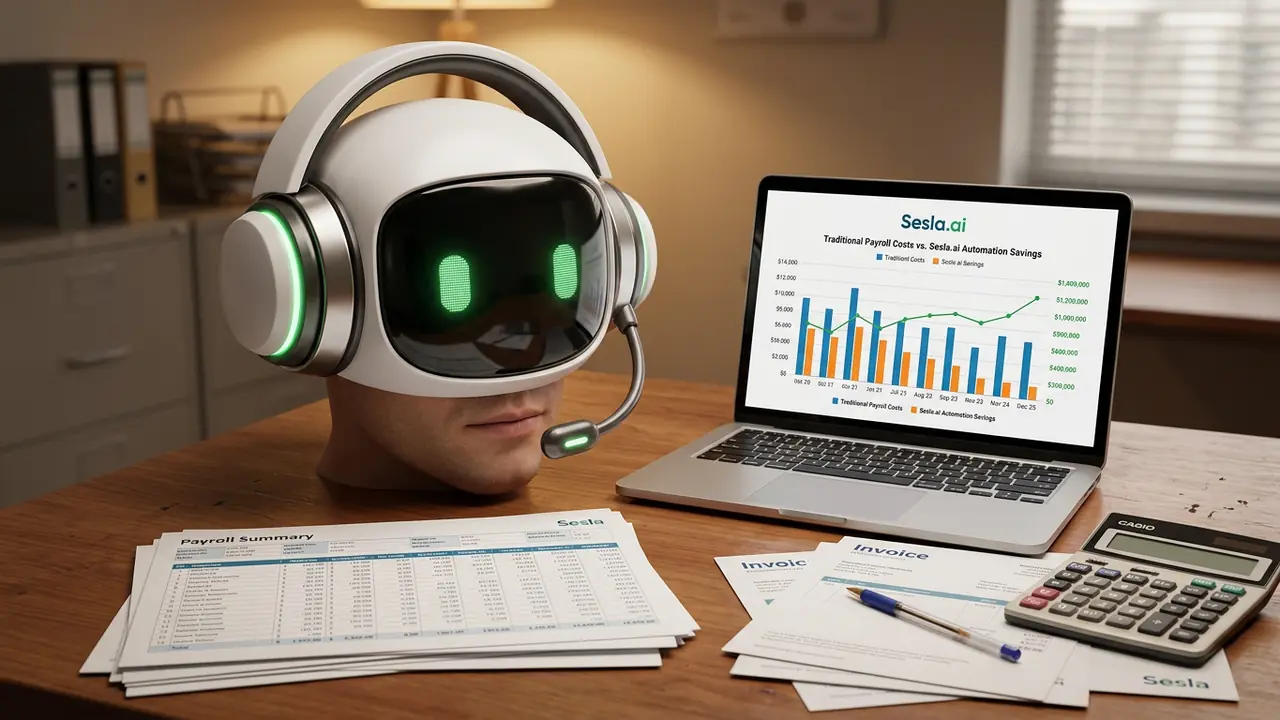
When these items are combined, the total monthly cost of a single agent to an employer significantly exceeds their net salary. Moreover, an agent can only handle one call at a time and works specific hours per day. 7/24 service requires at least three shifts and leave rotation; this means employing more than one person for a single "seat."
How much does an outsourced contact center cost?
Outsourcing eliminates fixed personnel burden; however, pricing is usually per call, per minute, or per agent-hour. As volume increases, the bill grows linearly. Furthermore, an external team may not know your business's products, automated flows, and customer language as well as your own team; this can decrease the first call resolution rate.
Another hidden cost of the outsourced model is loss of control. You cannot directly manage call quality, language used, and how customer data is processed. If there is a minimum volume commitment in the contract, you continue to pay the same fee even in quiet months.
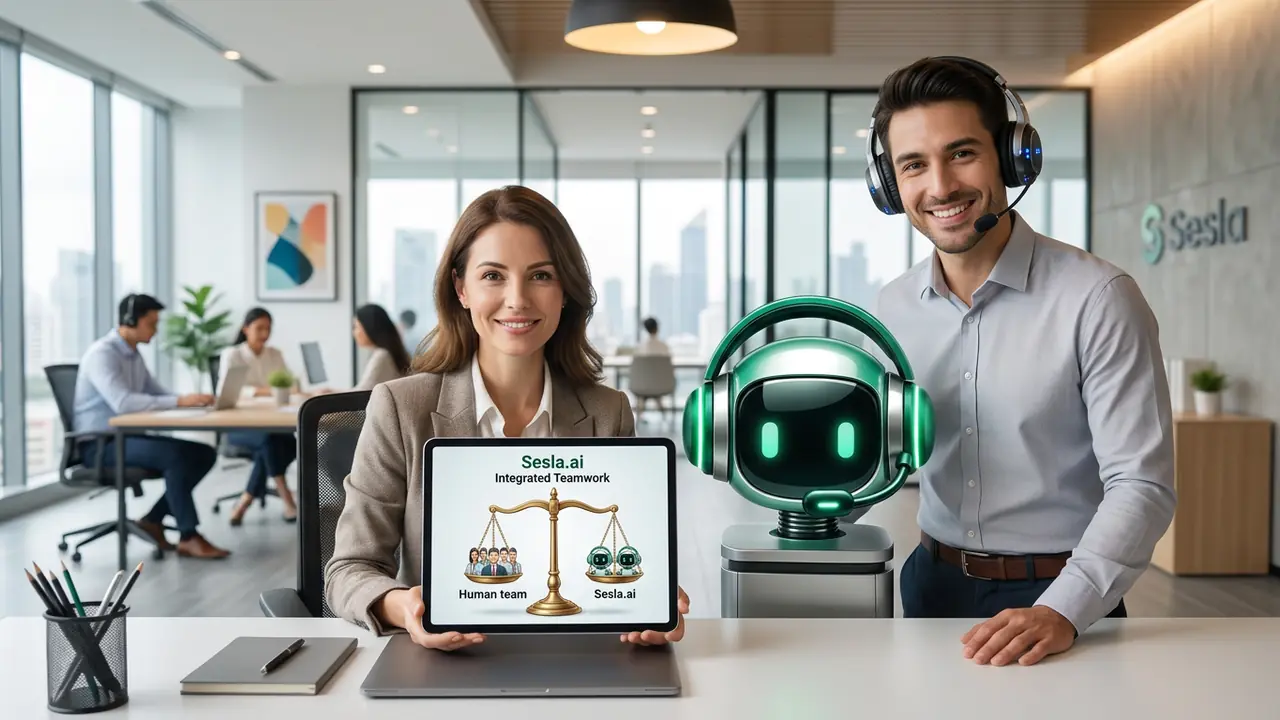
Cost model of an AI contact center
In an AI-powered contact center, the basic cost unit is talk minutes. A certain number of minutes are included in the package; additional minute charges apply when exceeded. There are no salary, premium, leave, training, or shift costs. The AI voice assistant works with the same consistency at 3 AM or on a holiday morning.
The most important difference is scalability. When call volume triples during an automated flow period, you don't need to hire new agents; the AI voice assistant handles multiple conversations in parallel depending on your package. Contact Center Automation thus reduces both fixed costs and waiting times during peak periods simultaneously.
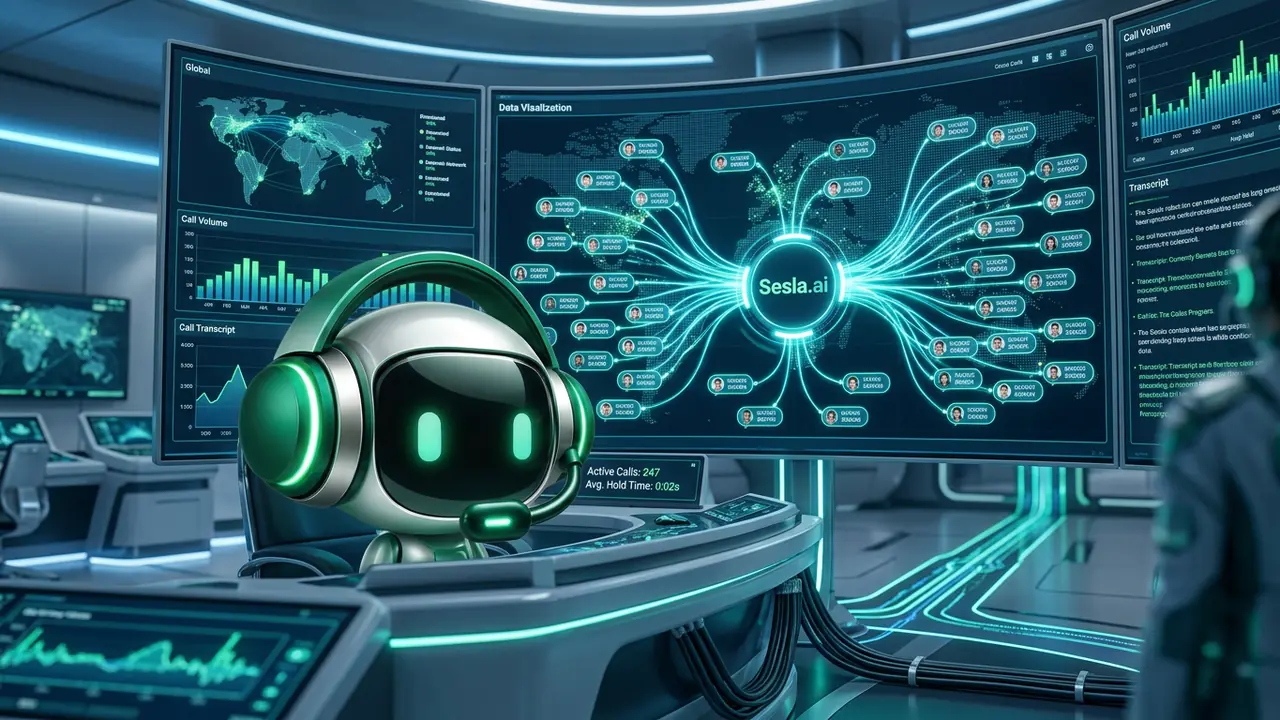
| Criterion | Your own contact center | Outsourced | Sesla AI |
|---|---|---|---|
| Cost structure | Fixed, personnel-heavy | Per call/minute/hour | Package + extra minutes |
| 24/7 service | With shifts, expensive | With extra charge | Standard |
| Scalability | Slow (recruitment) | Moderate | Instant |
| Training period | Weeks | Days–weeks | Knowledge base update |
| Consistency | Varies by person | Variable | Same standard in every conversation |
| Complex / emotional conversations | Strong | Moderate | With transfer to a person |
| Reporting | Manual sampling | Contractual | Summary and recording of every conversation |
Which calls should be automated?
It is not correct to delegate every call to AI. You get the highest efficiency from repetitive, rule-based, and information-based calls: order and delivery status, appointment scheduling and changes, business hours and address, pricing information, payment reminders, and basic technical questions. These calls constitute a significant portion of the total volume in most contact centers.
- Highly suitable for automation: information queries, appointments, order tracking, reminders, surveys.
- Should be managed hybrid: complaints, return requests, technical faults — the voice assistant collects information, a person resolves.
- Should be left to humans: sensitive health or legal assessments, high-value negotiations, crisis moments.
The correct approach is the hybrid model: AI handles the first contact, identifies the customer, classifies the need, and finalizes simple requests. When a complex request arises, it transfers the conversation, along with the collected information, to the appropriate agent. The agent does not have to ask the customer "could you please explain from the beginning?"

Sesla pricing and example calculation
The packages below represent Sesla's current prices and are automatically displayed from the single pricing source on the website. When selecting a package, consider your total monthly talk minutes and how many concurrent calls you need to handle.
| Plan | Monthly | Annual (per month) | Included minutes | Extra minute | Setup on annual |
|---|---|---|---|---|---|
| Starter Plan | $59.99 | $44.99 | 120 min | $0.25 | Paid |
| Professional Plan | $129.99 | $97.49 | 300 min | $0.23 | Paid |
| Enterprise Plan | $259.99 | $194.99 | 600 min | $0.22 | Free |
| Premium Plan | $519.99 | $389.99 | 1,200 min | $0.15 | Free |
Let's consider a hypothetical scenario: a business that receives 3,000 incoming calls per month uses at least two full-time agents to handle this volume, plus an additional solution for after-hours. When covering the same volume with an AI voice assistant package, one of the agents can be shifted to more valuable tasks—sales, loyalty, complaint resolution. To make this comparison with your own numbers, you can use the staff cost calculator on the pricing page.
Will quality and customer experience decrease?
The most frequent concern is that AI phone assistants will make the customer experience impersonal. In practice, what customers complain about most is waiting, hearing a busy signal, and having to repeat the same information multiple times. An AI assistant answers on the first ring, speaks with the same courtesy every time, and transfers information completely to the next step.
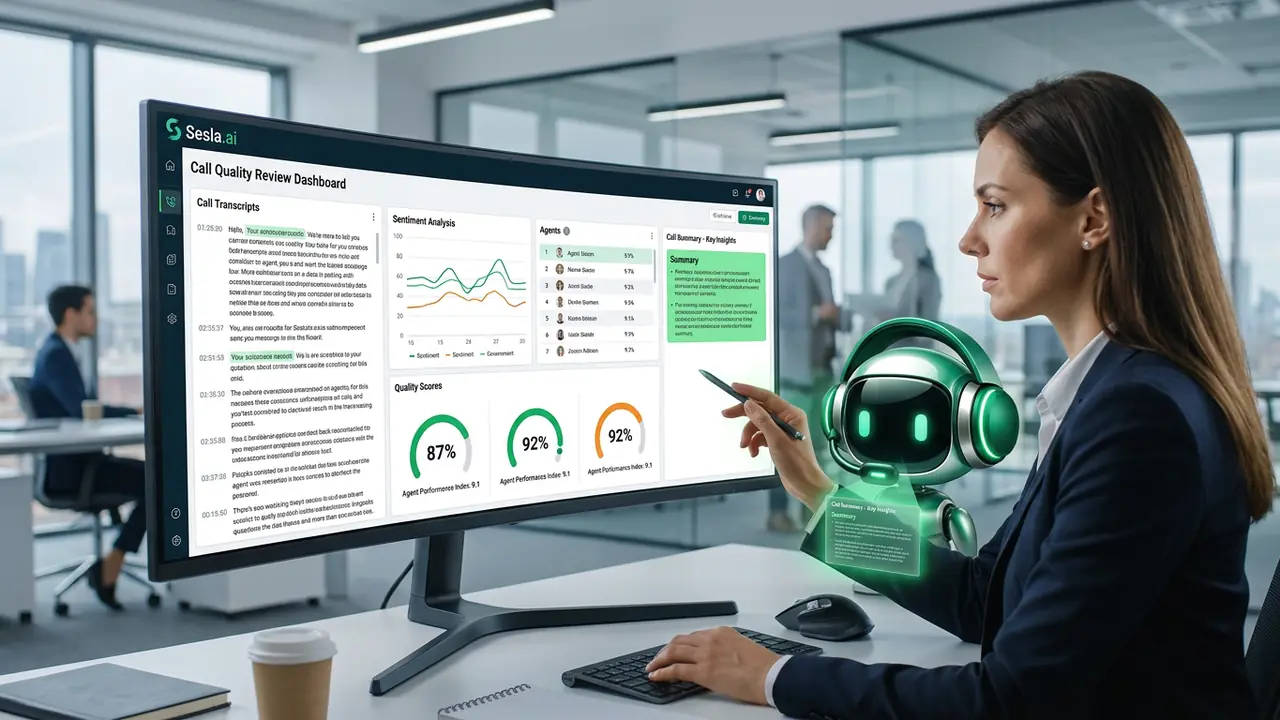
The key to maintaining quality is a good knowledge base and clear transfer rules. It's essential to define upfront what topics the AI assistant will answer, in what situations it will transfer to a human, and what information it will never attempt to guess. Regular review of call summaries ensures these rules are improved over time.
Steps to transition to an AI call center
- 1. Analyze existing calls: identify the 10 most frequent requests and their hourly distribution.
- 2. Select scenarios to automate and write the ideal response for each.
- 3. Define transfer rules: in what situation, to whom, with what information.
- 4. Start the AI assistant with after-hours and overflow calls; keep the risk low.
- 5. Review summaries from the first few weeks, update the knowledge base, then expand coverage.
This gradual transition helps your team adapt to the new system and allows you to catch potential errors without affecting customer experience. Many businesses start with after-hours calls and, within a few weeks, shift daytime overflow calls to the AI assistant. To see how Sesla manages this process, you can explore our AI call center and voice assistant solutions.

Hidden costs often overlooked in call center budgets
When preparing a call center budget, salaries and software licenses are usually calculated; however, the items that truly inflate the total cost are often not included in the spreadsheet. A comparison made without seeing these hidden costs underestimates both the true cost of the traditional model and the savings automation can provide.
Staff turnover and rehiring
Call centers are among the industries with the highest employee turnover rates. Each departing agent incurs new costs for the business in terms of job postings, interviews, the hiring process, onboarding, and low productivity in the initial weeks. Customer experience also fluctuates during the period until a new agent reaches full productivity. When this cycle repeats several times a year, it creates a significant budget item that isn't visible on paper but has a real impact.
Idle capacity
Call volume is not evenly distributed throughout the day. While distinct peaks occur in the morning and afternoon, lines are silent during certain hours. When a team is staffed for peak hours, salaries paid during quiet hours are wasted; if staffed for average volume, customers wait during peak hours, and calls are missed. In the traditional model, achieving this balance is nearly impossible. An AI phone assistant, however, only incurs costs for minutes used and automatically expands capacity with parallel conversations during peak hours.
Management and quality control burden
Every growing team generates management tasks such as shift planning, performance tracking, leave management, quality monitoring, and coaching. Team leaders spend a significant portion of their time on operational coordination. Quality control is typically done through a small sample; the vast majority of calls are never listened to. With an AI voice assistant, transcripts and summaries of every call are automatically generated, increasing quality visibility while reducing the management burden.
Opportunity cost of missed calls
Every call that goes to a busy signal or is abandoned during a long wait is a cost that doesn't appear on the invoice. Especially for sales and appointment-driven businesses, this loss can be even greater than agent salaries. A realistic cost analysis should consider not only money spent but also revenue not earned. Therefore, in call center decisions, answer rate and average wait time are indicators as important as cost.
Use of AI call centers by sector
The benefits provided by an AI call center vary depending on the call structure of the industry. The following examples show which businesses achieve the fastest returns for which call types and can be used as a starting point when planning your own scenario.
- E-commerce: Repetitive questions like order status, shipping tracking, and return/exchange policies are answered automatically; decisions such as return approvals are escalated to the team.
- Healthcare and clinics: Appointment creation, modification, and reminder processes are automated; medical evaluations are always left to a physician.
- Hotel and tourism: Reservation inquiries, room availability, transfer, and facility information are answered 24/7 in multiple languages.
- Finance and collections: Payment reminders and due date information are provided in a polite and consistent tone; disputes and restructuring requests are forwarded to specialists.
- Automotive and service: Service appointments, maintenance reminders, and parts status inquiries are managed without engaging the team.
- Educational institutions: During peak enrollment periods, program, fee, and application questions are answered instantly, and candidate information is transferred to advisors.
The common thread in these examples is that a significant portion of calls fit specific patterns. Every call type with a defined pattern is a candidate for automation. Conversations that fall outside the pattern, requiring empathy or authority, are left to the team. This way, both resources operate in their most efficient area.
How do you calculate Return on Investment (ROI)?
To calculate the return of an AI call center, you only need to sum three items: reduced personnel and overtime costs, revenue from captured additional calls, and decreased management burden. Subtract the monthly package and additional minute costs from this total, and you'll find the net monthly gain. To make the calculation conservative, we recommend including only directly measurable items in the first month.
| Item | Before Transition | After Transition | Difference |
|---|---|---|---|
| After-hours calls answered | 0 | 180 | +180 calls |
| Answer rate | %74 | %97 | +23 points |
| Overtime hours | 60 hours | 10 hours | −50 hours |
| Average wait time | 95 sec | Under 5 sec | Significant drop |
| Additional leads converted to appointments | — | 45 | +45 appointments |
A common mistake in ROI calculation is to focus solely on cost reduction while ignoring revenue increase. However, in many businesses, the main gain comes from capturing previously missed calls. Every additional call answered during after-hours and peak times is an opportunity that can directly convert to a sale or appointment.
The new role of the human team
One of the most frequently asked questions when transitioning to an AI call center is what will happen to the existing team. Our experience shows that teams are transforming rather than shrinking. Agents freed from repetitive calls focus on higher-value tasks such as complaint resolution, sales conversations, loyalty programs, and special customer relationships. This increases both employee satisfaction and revenue per customer.
One of the team's new roles is to be the AI assistant's "trainer." Agents who review call summaries, identify missing information, and update the knowledge base continuously improve the AI assistant's performance. Thus, the team sees automation not as a threat but as a tool that simplifies their work and makes them more valuable.
Involving the team from the beginning of the transition process is critical for success. The agents who speak with customers every day are the ones who best know which calls will be automated, the transfer rules, and the ideal responses. When their experience is transferred to the AI assistant's knowledge base, customers experience both speed and a quality of service that recognizes your business.
What to look for when choosing an AI call center provider?
- Turkish speech quality: Natural intonation, understanding local expressions, and seamless dialogue management.
- Transparent pricing: Clearly stated included minutes, additional minute charges, and setup conditions.
- Number flexibility: Ability to work with your existing number through redirection.
- Transfer and rule management: Easily define when to transfer and to whom.
- Reporting: Transcript, summary, and key performance metrics for every call.
- Data security: GDPR/KVKK compliant processes, clear access permissions, and retention periods.
- Support and setup: Expert support in preparing the knowledge base and during the first few weeks.
The healthiest method to verify these criteria is through a short trial period. Test the AI assistant with your most frequent call scenarios, have a few team members call as if they were customers, and evaluate the call summaries. The real customer experience should be the determining factor, not just technical specifications.
2026 and beyond: What awaits call centers?
Voice AI technology has made significant leaps in natural conversational fluency and latency over the last two years. Customers now expect fluid conversations where they can ask questions in their own words without being interrupted, rather than robotic, templated menus. This expectation is rapidly leading to the replacement of touch-tone interactive voice response (IVR) systems with conversational AI assistants.
In the coming period, we expect three trends to emerge in call centers. The first is channel convergence: phone, WhatsApp, web chat, and email will be managed through a single AI assistant and a single customer history. The second is proactive communication: appointment reminders, payment notifications, and satisfaction calls will be made automatically before the customer calls. The third is data-driven improvement: analysis of every conversation will directly inform product, service, and process decisions.
Businesses that adapt early to this transformation gain the opportunity to turn customer service from a cost center into a growth channel. A small, measurable step taken today, such as starting only with after-hours calls, allows both the team and customers to naturally adapt to the new system and forms a solid foundation for future expansion.
What to expect in the first 90 days?
The first month is when the AI assistant gets to know your business. The knowledge base is tested with real conversations, missing answers are completed, and transfer rules are clarified. In the second month, the transfer rate begins to drop, and the AI assistant resolves more requests independently. By the end of the third month, you'll have a clear picture that you can compare to before the transition: answer rate, wait time, after-hours requests captured, and changes in the team's routine call load. This table allows you to base the decision to expand scope on data, not guesswork.
Regularly collecting feedback from your team during this process both accelerates the adoption of automation and allows you to transfer the experience of those closest to the customer into the AI assistant's knowledge base.
Conclusion
The way to reduce call center costs is not to abandon customer service, but to direct human effort where it is most valuable. The hybrid model, which leaves repetitive calls to AI phone assistants and complex, relationship-oriented conversations to your team, is currently the most balanced solution in terms of both cost and quality. To plan the most suitable setup for your call structure together, simply share your needs.
Frequently asked questions
How much does an AI contact center cost?
Costs vary by monthly talk minutes and package. Sesla packages are transparently listed on the pricing page with monthly and annual options; additional minute charges apply if included minutes are exceeded.
Is it cheaper to build my own contact center or outsource?
Outsourcing can be advantageous for low and predictable volumes, while your own team might be better for high and stable volumes. However, in most scenarios with a high volume of repetitive calls, a hybrid model with AI is the option that reduces total cost the most.
Will AI completely replace agents?
No. It handles repetitive and information-based calls, transferring complex, emotional, or high-risk conversations to your team.
What does an agent's true cost to an employer include?
Gross salary, employer's social security contributions, unemployment insurance, meal and travel allowances, overtime, leave, training, and equipment. The total cost is significantly above the net salary.
Which calls can be automated?
Order and delivery tracking, appointment scheduling and changes, business hours, address, pricing information, payment reminders, and satisfaction surveys are the most suitable examples.
How many calls can AI handle simultaneously?
Depending on your package, multiple conversations run in parallel. This prevents customers from waiting during automated flow periods and peak hours.
Will customer satisfaction decrease?
When designed correctly, it usually increases; because waiting times and busy signals are eliminated, information is delivered consistently, and complex requests are transferred to a person with collected information.
How long does the transition take?
Basic scenarios can go live within a few days. For a gradual transition, we recommend starting with after-hours and overflow calls.
Does it work with my existing PBX and CRM system?
Your current number is retained with call forwarding. Integration options with calendar, CRM, and automation tools are determined based on your account and the tool you use.
Can it provide service in languages other than Turkish?
Yes. In addition to Turkish, Sesla can converse in English, German, Arabic, and many other languages; this provides an advantage especially for tourism and export businesses.
How are call recordings and data stored?
What data will be collected, who will access it, and retention periods are determined in conjunction with your business; a flow compliant with GDPR/KVKK disclosure obligations is established.
Describe your needs in 3 minutes and we prepare your assistant draft and quote.