
What to consider when cloning your business voice
A familiar voice keeps your brand consistent on the phone. Consent and quality must be clear from the start.
A brand's voice can be as recognizable as its logo and colors. The voice of the receptionist who has answered the phone for years, the warm tone of the business owner, or the voice-over used in advertisements becomes associated with the brand in the customer's mind. AI voice cloning makes it possible to bring this familiar voice to your phone assistant. However, this technology requires a careful approach regarding consent, quality, and ethical issues. In this guide, we explain what business voice cloning is, when it makes sense, the legal and ethical framework, recording tips for a high-quality voice model, and the step-by-step process with Sesla.
What is business voice cloning?
Voice cloning is the process of creating an AI voice model that can mimic a person's tone, accent, and speech characteristics from their voice recordings. The created model then renders every sentence spoken by the assistant in a voice similar to that person's. Thus, your phone assistant speaks with a custom voice for your brand, instead of a ready-made "standard" voice.
Sesla's ready-made voices are also very natural and high-quality; they are sufficient for most businesses. Voice cloning, on the other hand, offers additional value for businesses with a strong brand identity, a recognizable voice, or where customers have a strong connection with a specific voice. Our voice cloning feature manages this process with consent and quality controls.
When does voice cloning make sense?
| Criterion | Ready-made Sesla voice | Cloned brand voice |
|---|---|---|
| Setup time | Instant | Recording and model preparation required |
| Brand originality | High quality, generic | Brand-specific, familiar |
| Consent process | Not required | Written consent mandatory |
| Personnel change risk | None | Must be planned in advance |
| Multilingual use | Wide language selection | Depends on model and language |
| Most suitable for | Most businesses | Those with a strong brand voice |
- Makes sense: If customers have known the voice of a business owner or receptionist for years.
- Makes sense: If working with a professional voice-over artist used in advertisements and promotions.
- Makes sense: If the same brand voice is desired across all branches of a chain business.
- May be unnecessary: If you want to start quickly and a brand voice has not yet been established.
- Caution: If there is a high probability that the person whose voice will be used will leave the business.
Consent, ethics, and legal framework
Voice is a personal attribute and constitutes personal data. Therefore, explicit, informed, and written consent of the individual is required to clone their voice. The consent text must clearly state the purpose, channels, duration of voice usage, and how the individual can withdraw their consent.
The second important issue is personnel change. If the employee whose voice is cloned leaves the business, it must be decided in advance whether the voice model will continue to be used. In most cases, the healthiest approach is to remove the model from use when the person leaves, or to re-obtain their consent. If working with professional voice-over artists, usage rights should be clarified in the contract.
- Explicit and written consent: purpose, channel, duration, and right to withdraw must be specified.
- GDPR/KVKK disclosure: how voice data will be processed and stored must be explained.
- Personnel departure: the fate of the model must be decided in advance.
- Transparency: customers must be informed that the assistant is a digital assistant.
- Prohibition of misuse: the voice model must only be used in the business's assistant.
Tips for quality recording
The quality of the voice model directly depends on the quality of the recordings. A professional studio is not mandatory; however, a quiet environment, a good microphone, and a natural speaking style make a big difference. Recordings that resemble the sentences to be used on the phone also enable the model to sound more natural in real-world scenarios.
- Choose a quiet, echo-free room; carpets, curtains, and furniture reduce echo.
- Maintain a constant distance between the microphone and your mouth.
- Read at a natural pace and in a conversational tone; avoid exaggerated emphasis.
- Include sentence types that will be used on the phone in the recording: greetings, questions, confirmations, apologies.
- Record when rested, not tired; voice tone remains consistent.
Sesla difference: secure and controlled voice cloning
Sesla manages voice cloning not just as a technical process, but also with consent and quality processes. A model is not created without a consent form; once the model is ready, it is tested with real conversation scenarios and is not deployed live without the business's approval. The model is only used in that business's assistant.
| Stage | What is done? | Responsible |
|---|---|---|
| Consent | Written approval and disclosure | Business + voice owner |
| Recording | Reading of guided texts | Voice owner |
| Model | Creation of the voice model | Sesla |
| Test | Testing with real-world scenarios | Sesla + business |
| Approval and publishing | Going live with business approval | Business |
Where is a cloned voice used?
A cloned voice is most commonly used for inbound calls: when a customer calls the business, they are greeted by a familiar voice. Additionally, the same voice can be used for outbound calls such as appointment reminder calls, order confirmation calls, and satisfaction surveys. This ensures a consistent experience for the customer in every interaction with the business.
When using a cloned voice for outbound calls, extra care is needed. It is important for the AI assistant to introduce itself as a digital assistant so that the customer does not mistake the caller for a real employee. Transparency both maintains trust and prevents potential misunderstandings.

Pricing
Voice cloning is planned according to the package scope and usage. The AI assistant's talk minutes are utilized from your standard package minutes. The table below shows the current Sesla packages.
| Plan | Monthly | Annual (per month) | Included minutes | Extra minute | Setup on annual |
|---|---|---|---|---|---|
| Starter Plan | $59.99 | $44.99 | 120 min | $0.25 | Paid |
| Professional Plan | $129.99 | $97.49 | 300 min | $0.23 | Paid |
| Enterprise Plan | $259.99 | $194.99 | 600 min | $0.22 | Free |
| Premium Plan | $519.99 | $389.99 | 1,200 min | $0.15 | Free |
You can use the calculator on the pricing page to compare packages and personnel costs.
Common mistakes
- Relying on verbal consent; written and detailed consent must be obtained.
- Recording in a noisy environment.
- Reading in an exaggerated, promotional tone; it sounds artificial on the phone.
- Going live without testing.
- Not stating that the AI assistant is a digital assistant to the customer.
Before deciding on voice cloning, we recommend listening to Sesla's pre-recorded voices; many businesses find that the quality of these ready-made voices meets their needs. You can try the ready-made voices in the live demo on the homepage.
Designing voice and tone together
Voice cloning only captures the timbre of the voice; how the AI assistant speaks is determined by the tone of voice and scenarios. The same voice creates a different impression when speaking formally compared to intimately. Therefore, the decision to use voice cloning should be considered alongside the AI assistant's greeting, addressing style, and chosen expressions.
For example, a boutique hotel might choose to clone the owner's warm voice and address guests in a friendly yet elegant manner. A law firm, however, would prefer a more measured and formal tone. During the setup process, this tone is jointly determined through sample conversations and consistently applied in all of the AI assistant's dialogues.
Another point to consider in tone design is expressions suitable for different situations. A calm and understanding tone should be used in a complaint call, a brief and clear tone for an appointment confirmation, and a warm and inviting tone for a greeting. When the cloned voice remains natural in these different situations, the customer experience becomes integrated.

Voice cloning process step-by-step
The first step is an initial consultation. In this meeting, who the voice will be from, in which channels it will be used, and the brand's tone of voice are determined. Then, written consent is obtained from the voice owner, and GDPR/KVKK disclosure is provided. The recording stage does not proceed until the consent document is completed.
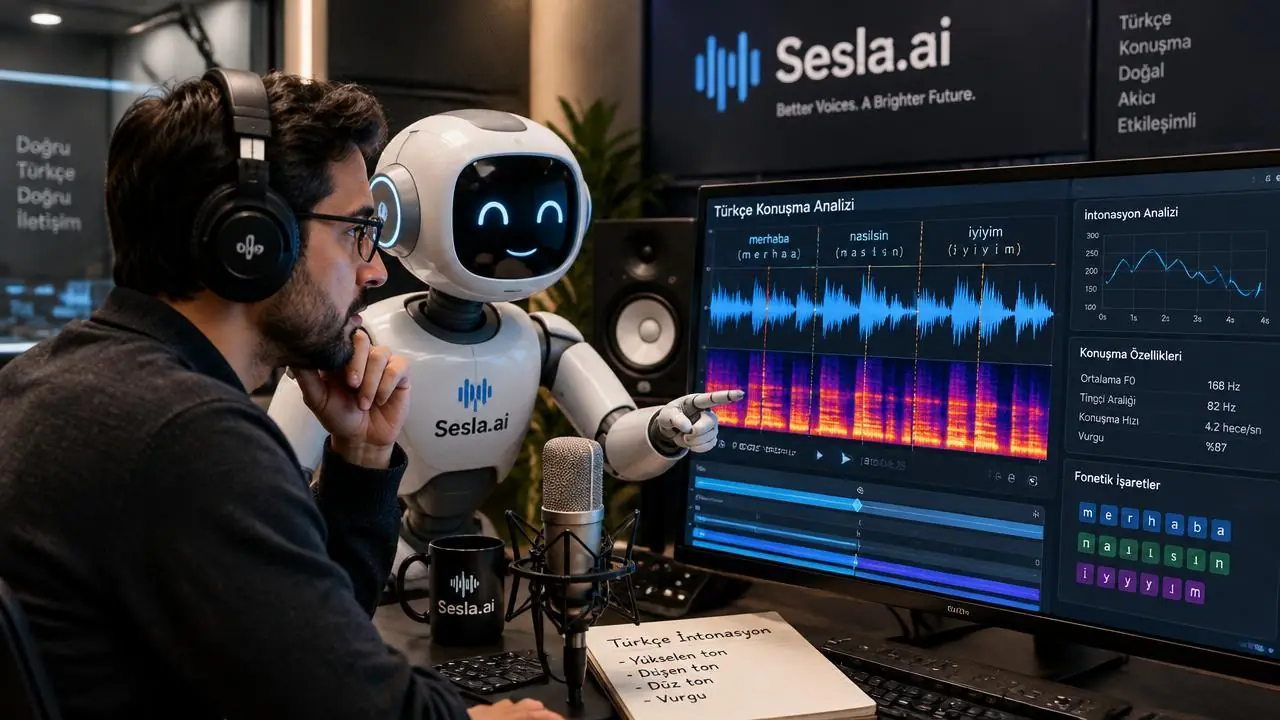
The second step is recording. The voice owner is given directed texts containing sentence types to be used on the phone. These texts cover different emotions and tones such as greeting, giving information, asking questions, confirming, and apologizing. Recordings can be done in a quiet environment, in several sessions. Recording quality is controlled; noisy or inconsistent recordings are re-recorded.
The third step is model creation and testing. The prepared voice model is tested with real conversation scenarios. The business owner and voice owner listen to sample conversations; points needing correction in terms of pronunciation, tempo, and intonation are identified. If necessary, the model is improved with additional recordings. In the final step, the model goes live with the business's approval.
- Initial consultation: use case and brand tone.
- Consent: written approval and GDPR/KVKK disclosure.
- Recording: multiple sessions with directed texts.
- Model and test: testing with real scenarios.
- Approval: publishing with business and voice owner approval.
- Follow-up: regular listening and improvement if necessary.
Turkish pronunciation and proper nouns
A common issue in voice cloning is the correct pronunciation of brand names, product names, and place names. Foreign-origin brand names or abbreviations may be read unexpectedly by the AI voice model. Therefore, during setup, a list of proper nouns is prepared, and their correct pronunciation is tested. If necessary, pronunciation rules are defined to ensure the AI assistant always pronounces these names correctly.
Numbers, dates, and times are also important considerations. Reading phone numbers in groups, clearly stating prices, and intelligibly expressing dates directly affect the customer experience. Sesla manages these issues in a way that is consistent with Turkish speaking habits.
The value a brand voice adds to a business
A familiar voice strengthens the emotional bond the customer establishes with the business. Customers who have been greeted by the same voice for years feel at home when speaking with the AI assistant. This continuity helps maintain trust, especially in businesses with a loyal customer base. In chain businesses, using the same voice across all branches standardizes the brand experience and ensures the customer feels the same quality no matter which branch they call.
While this value cannot be measured directly with a single figure, indicators such as customer feedback, repeat call rates, and conversation duration provide insight. Customers feeling comfortable speaking with the AI assistant contributes to shorter and more results-oriented conversations.
Voice cloning examples by sector
Boutique hotels and premium accommodation businesses can offer a personalized welcome to their guests by cloning the voice of the owner or general manager. When a guest calls for a reservation, they are greeted by the familiar voice they heard during previous stays at the hotel. This strengthens the guest's connection with the hotel.
Clinics and healthcare centers might prefer the voice of a receptionist whom patients have known for years. Patients who are greeted by the same voice throughout their treatment processes feel more secure. However, in this case, the receptionist's consent and actions in case of departure must be planned with particular care.
Chain restaurants and retail brands can ensure brand consistency by using the voice of the professional voice artist from their advertisements in the AI phone assistant of all their branches. In this case, usage rights must be clearly defined in the contract with the artist.
Educational institutions and course centers can also provide a reassuring first contact to prospective students by using the voice of a founder or a well-known instructor. In every case, the common principle is the same: clear consent, quality recording, transparent communication, and regular quality control.
Voice cloning checklist
- Decide whose voice will be cloned.
- Prepare the written consent document: purpose, channel, duration, right of revocation.
- Determine what will happen upon separation or contract termination.
- Set up a quiet environment and appropriate microphone for recording.
- Prepare a pronunciation list for brand names and proper nouns.
- Define the tone of voice with example sentences.
- Write scenarios for test calls.
- Determine the greeting phrase where the AI assistant introduces itself as a digital assistant.
Example: brand voice in a boutique hotel
Let's consider a twenty-room boutique hotel in Istanbul. The hotel owner has personally greeted guests for years, and their warm voice has become part of the hotel's identity. The hotel decides to implement an AI phone assistant to avoid missing reservation calls at night and wants the owner's voice cloned.
The process begins with the hotel owner's written consent. The consent document explicitly states that the voice will only be used in the hotel's phone and messaging AI assistant, and the model will be retired if the hotel is sold or the owner wishes. Then, the owner reads directed texts in several sessions; greetings, room type information, price explanations, and apology sentences are recorded.
After the model is prepared, it is tested with real reservation scenarios. The pronunciation of the hotel's name, district names, and room types is checked; the reading of a few names is corrected. When the AI assistant goes live, guests calling from abroad at night are also greeted by a familiar and warm voice. The AI assistant introduces itself as the hotel's digital assistant at the start of the conversation; guests positively receive this transparency.
Before deciding on voice cloning, ask yourself
- Is our brand voice truly recognized by our customers?
- Will the person whose voice is used be with the business in the long term?
- Do ready-made voices adequately reflect our brand tone?
- In which channels and languages will it be used?
- How will consent and separation processes be managed?
Quality control after going live
Regular quality control after the voice model goes live ensures that the AI assistant always remains natural and consistent. Listening to sample conversations in the first few weeks helps you detect pronunciation errors, strange emphases, or intonation problems early. Most of these issues are resolved with small adjustments to the phrases or pronunciation rules in the knowledge base.
Customer feedback is also a valuable resource. Indicators such as whether customers feel comfortable speaking with the AI assistant, how long conversations last, and transfer rates provide insight into the voice's impact on the customer. Conversations lasting longer than expected or frequent requests for repetition may indicate that the voice's speed or clarity needs to be reviewed.
Over time, your brand's tone may change, or new services may be added. In this case, it should be checked whether the voice model is compatible with new expressions, and if necessary, the model should be updated with additional recordings. The voice owner's consent should also be reconfirmed at regular intervals to ensure continuous authorized use.
Sesla's ethical principles in voice cloning
Sesla uses voice cloning technology solely for businesses' own customer communication and with explicit consent. A person's voice is not cloned without their written consent. Requests to imitate the voices of celebrities, public figures, or any person who has not given permission are not accepted. The created voice models are only used in the relevant business's AI assistant and are not shared for any other purpose.
The AI assistant introducing itself as a digital assistant is also part of these principles. No scenario is created that would lead the customer to believe they are speaking with a real person. This transparency protects both customer trust and the voice owner's rights, ensuring the responsible use of technology.
Key takeaways
- Voice cloning adds extra value for businesses with a strong brand voice; for most businesses, ready-made voices are sufficient.
- The explicit and written consent of the person whose voice will be used is essential.
- The fate of the model upon separation or contract termination must be decided beforehand.
- Recordings made in a quiet environment and at a natural pace yield the best results.
- The pronunciation of proper nouns must be tested and corrected with rules if necessary.
- The AI assistant must always introduce itself as a digital assistant.
These principles ensure that voice cloning is used both effectively and responsibly. Sesla operates within this framework and works with the business at every step of the process.
If you are in the decision-making phase, you might consider starting with Sesla's ready-made voices and, if needed, switching to voice cloning a few weeks later. This approach allows you to quickly see the benefits the AI assistant provides your business; voice cloning can then be implemented as an additional step when you want to elevate your brand experience. This way, you save time and base your decision on real conversation data. In either path, the Sesla team plans and implements the process with you.
Whichever path you choose, your AI assistant's voice will be the face of your brand on the phone. Therefore, the voice's alignment with your brand's values, customer base, and communication tone is as important as technical quality. Sesla helps you make this decision by evaluating ready-made voice options and the voice cloning process with you during the setup consultation and suggests the most suitable path for your needs.
Conclusion
When used correctly, business voice cloning makes your brand recognizable and consistent on the phone. The key to success is clear consent, quality recording, meticulous testing, and transparent communication. Sesla manages this process with you from start to finish and securely brings your brand voice to your AI assistant.
Frequently asked questions
What is business voice cloning?
It is creating an AI voice model from a specific person's voice recordings and using it in a phone assistant.
Is permission required?
Yes. The explicit, informed, and written consent of the person whose voice will be used is mandatory.
What happens if an employee leaves?
The fate of the model should be decided in advance; generally, usage is terminated or the person's consent is re-obtained.
How much recording is needed?
The required recording duration varies by model; you will be provided with guided reading texts during setup.
Is a studio necessary?
No. A quiet, echo-free room and a good microphone are sufficient in most cases.
Can the cloned voice speak different languages?
It depends on the model and the language; during setup, the languages in which it will be used are evaluated together.
Should customers be told it's AI?
Yes, for transparency, we recommend that the assistant introduce itself as a digital assistant.
Is the voice model used elsewhere?
No. The model is only used in the assistant of the relevant business.
Are ready-made voices not enough?
They are sufficient for most businesses; voice cloning provides additional value for those with a strong brand voice.
Can it be used for outbound calls?
Yes, it can also be used for reminder and confirmation calls; transparent introduction is recommended.
How is voice data protected?
The processing and storage of voice data are determined in conjunction with the business within the framework of GDPR/KVKK disclosure.
Describe your needs in 3 minutes and we prepare your assistant draft and quote.