
AI Call Center Pricing 2026–2027: Price List, Cost and ROI Guide
What does an AI call center really cost? The 2026–2027 price list, plan selection, hidden costs and an ROI method using your own numbers.
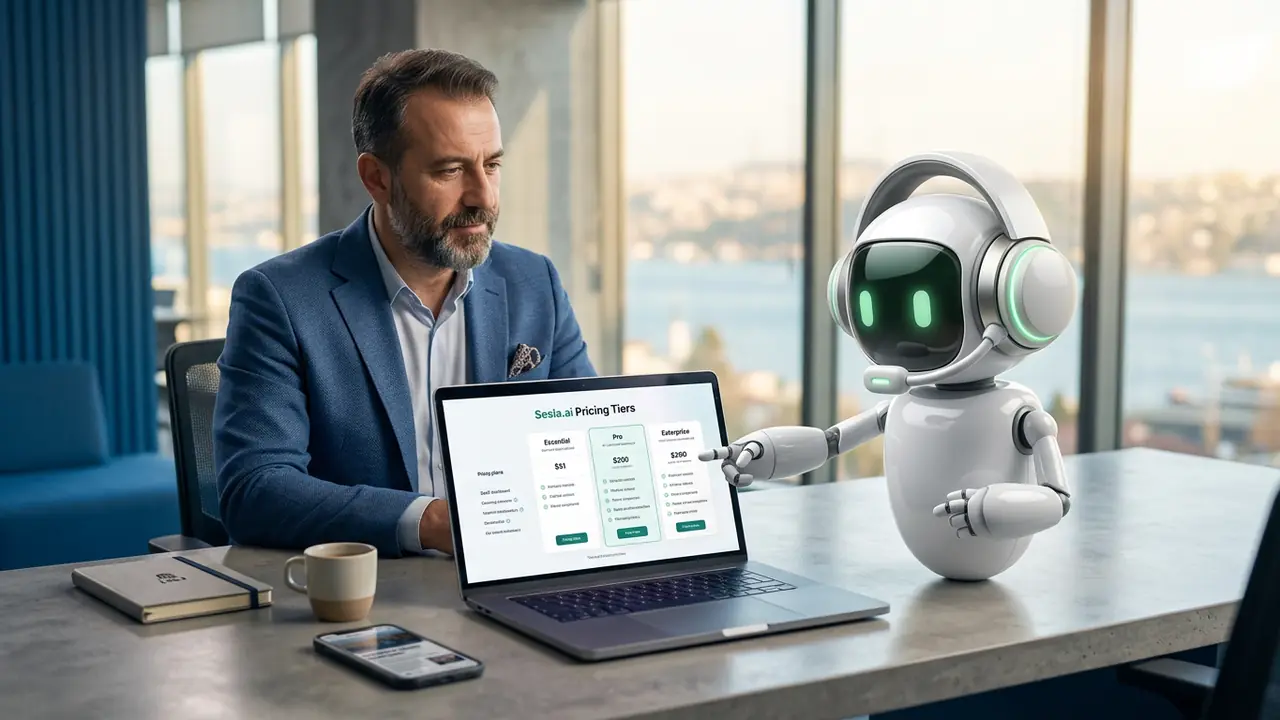
Every business planning its customer service budget for 2026–2027 asks the same first question: what does an AI call center really cost, and how much does it save compared with a traditional team? This guide explains how to read an AI price list, which line items matter when choosing a plan, where hidden costs usually sit and how to calculate the return on investment with your own numbers. The goal is not a sales brochure, but a transparent decision framework you could put on a finance director’s desk.
AI call center price list 2026–2027
Unlike a classic contact center, AI call center pricing is not built on seats or agents but on usage. You do not buy a number of people; you buy the minutes of conversation you handle each month. For businesses whose volume fluctuates by season, campaign or time of day, this makes the budget far more predictable. The table below summarises the current Sesla AI plans running on Türkiye’s most advanced AI call center infrastructure.
| Plan | Monthly | Annual (per month) | Included minutes | Extra minute | Setup on annual |
|---|---|---|---|---|---|
| Starter Plan | $59.99 | $44.99 | 120 min | $0.25 | Paid |
| Professional Plan | $129.99 | $97.49 | 300 min | $0.23 | Paid |
| Enterprise Plan | $259.99 | $194.99 | 600 min | $0.22 | Free |
| Premium Plan | $519.99 | $389.99 | 1,200 min | $0.15 | Free |
Pay attention to three columns. First, the gap between monthly and annual price: annual billing gives a clear discount and simplifies planning. Second, included minutes: choosing the plan closest to your average monthly talk time keeps extra charges minimal. Third, the extra-minute rate: if you regularly exceed a plan, the next tier often becomes cheaper per minute.
Which plan fits which business?
- Starter Plan: single-location clinics, offices, salons or service firms receiving a few dozen calls a day — ideal for after-hours and overflow calls.
- Professional Plan: small and mid-sized businesses automating inbound and consent-based outbound calls such as confirmations and reminders.
- Enterprise Plan: teams running several assistants, departments or branches. Expert setup is free on the annual plan.
- Premium Plan: high-volume organisations moving most of their call center to AI. Expert setup is free on the annual plan.

How to calculate the true cost of a traditional call center
The only meaningful way to judge an AI price is against the total cost of ownership of your current model. Most companies compare against gross salary alone and underestimate savings. The real cost of an agent includes employer contributions, meal and travel allowances, equipment, software licences, training time, management overhead and the capacity gap created by holidays and sick leave.
Then comes capacity. One agent works roughly 45 hours a week, yet a week has 168 hours. Covering a single seat 24/7 requires four to five people on shifts, with night premiums, absence and high staff turnover. An AI call assistant handles many conversations in parallel, needs no breaks and answers at 3 a.m. within the first second.
| Item | 3-person team (office hours) | 24/7 human team (5 people) | AI call center |
|---|---|---|---|
| Hours covered | ~45 per week | 24/7 | 24/7 |
| Concurrent calls | 3 | 1–2 per shift | Parallel, by plan capacity |
| Salary + employer costs | High | Very high | None |
| Training and onboarding | Repeated for every hire | Repeated for every hire | Knowledge base updated once |
| Absence and turnover risk | Yes | Yes | No |
| Recording, transcript, summary | Extra software | Extra software | Automatic on every call |
7 factors that determine the price of an AI call center
Two businesses on the same plan can receive different invoices, because usage patterns drive total cost more than the list price. Clarifying these seven factors before requesting a quote is the safest foundation for a bill without surprises.
- 1. Monthly talk minutes: the decisive item. Multiply your last three months’ average call count by average call length.
- 2. Average call length: short information calls and long sales conversations consume the same plan at very different speeds.
- 3. Inbound vs outbound ratio: consent-based reminders and confirmations also use minutes — include them.
- 4. Number of assistants: different departments, languages or brands may need separate assistants.
- 5. Channel coverage: WhatsApp, Instagram DM and web chat in addition to phone. WhatsApp Business Platform message fees are set separately by Meta.
- 6. Number and line type: forwarding your existing number usually removes extra number costs.
- 7. Integrations and setup: calendar, CRM and order systems. Expert setup is free on annual Enterprise and Premium plans.
The first three factors define your minute requirement, the last four your scope. As a practical rule, start with a realistic plan and resize after reviewing the first 30 days of reports — this is always more efficient than guessing a large plan up front.

Not the cheapest, the right infrastructure
Comparing only the cost per minute is tempting, but the real cost often hides in a poor conversation experience. A system that interrupts callers, misunderstands accents, answers after long silences or keeps saying “I didn’t get that” loses customers even if it is cheap. Test these three properties before you decide.
Natural conversation and understanding
People do not speak on the phone the way they write. They break off sentences, correct themselves and ask two questions at once. A good AI phone assistant keeps context, understands natural speech and replies in short, clear and polite sentences. Sesla is designed for this in Turkish, English, German and many other languages, and continues in the language the caller chooses.
Latency and barge-in handling
Half a second of delay breaks the flow of a phone call. Advanced infrastructure keeps listening while the caller talks, stops when they interrupt and resumes smoothly. It sounds like a technical detail, but it decides whether a caller keeps talking to the system at all.
Security, recording and compliance
For every call it must be clear which data is collected, who can access it and how long it is kept. For businesses serving European customers, GDPR transparency, consent for outbound calls and retention periods should be planned from day one. Sesla records, transcribes and summarises each call and keeps outbound communication strictly consent-based.

How to calculate the return on investment
The return on investment of an AI call center comes from two sources: costs you avoid and revenue you recover. Avoided cost is the staff capacity you no longer need for routine calls. Recovered revenue comes from calls that would otherwise have gone unanswered — after hours, during lunch, at weekends or when every line is busy.
- Step 1: count last month’s missed and unanswered calls.
- Step 2: estimate what share would have become a booking, order or quote.
- Step 3: multiply by your average customer value.
- Step 4: subtract the monthly plan price, including expected extra minutes.
- Step 5: add the staff hours freed for higher-value work.
Example: a clinic misses 120 calls a month, 25% would have booked and the first treatment is worth $180. That is $5,400 of monthly potential — many times the price of a Professional or Enterprise plan. Your numbers will differ; the method stays the same. For a broader view of use cases, read our AI call center solutions guide.
| Industry | Missed calls / month | Conversion | Average value | Monthly potential |
|---|---|---|---|---|
| Dental clinic | 120 | 25% | $180 | $5,400 |
| Real estate office | 80 | 8% | $1,500 commission | $9,600 |
| Restaurant bookings | 200 | 55% | $40 | $4,400 |
| Technical service | 110 | 35% | $60 | $2,310 |
| Beauty salon | 90 | 35% | $55 | $1,733 |
Hidden costs to check before signing
- Setup and onboarding fees that are not shown on the price list.
- Per-number or per-line charges for new phone numbers.
- Separate fees for recordings, transcripts or analytics.
- Minimum contract terms and cancellation conditions.
- Overage rates that are much higher than the plan’s implied minute price.
- Integration work billed hourly by third parties.
At Sesla the plan price, included minutes and extra-minute rate are published openly, your existing number stays, and recordings, transcripts and summaries are part of every plan. Cancellation and refund terms are documented in our subscription policy.

Rolling out in 30 days without budget risk
Week one: define the scenarios, knowledge base and handover rules. Week two: forward after-hours and overflow calls to the assistant. Week three: review recordings, refine answers and connect your calendar. Week four: expand coverage and resize the plan based on real minute usage. This keeps the first invoice predictable and every decision backed by data.

Conclusion: transparent price, deep infrastructure in 2026–2027
What sets Sesla apart for 2026–2027 is the combination of transparent pricing and deep infrastructure. Plan price, included minutes and extra rates are written openly, setup is free on annual Enterprise and Premium plans and your number stays the same. Compare all plans on the pricing page and talk to Defne in a free live demo before you decide.
Frequently asked questions
How much does an AI call center cost per month?
Sesla AI plans start at $44.99 per month on annual billing. Each plan includes minutes; usage above that is billed at a published extra-minute rate.
Is an AI call center cheaper than human agents?
For routine and after-hours calls, usually yes: there are no salaries, shifts or training repeats, and calls run in parallel. Complex cases can still be handed to your team.
Are there setup fees?
Expert setup is free on annual Enterprise and Premium plans. Other plans can be set up self-service or with paid expert support.
Can I keep my existing phone number?
Yes. Calls are forwarded from your existing number, so customers keep dialling the number they know.
How do I calculate ROI?
Missed calls × conversion rate × average customer value, minus the plan price, plus staff hours freed for higher-value work.
Describe your needs in 3 minutes and we prepare your assistant draft and quote.